

Factors of historical information credibility assessment in student environment (Great Patriotic War representations)
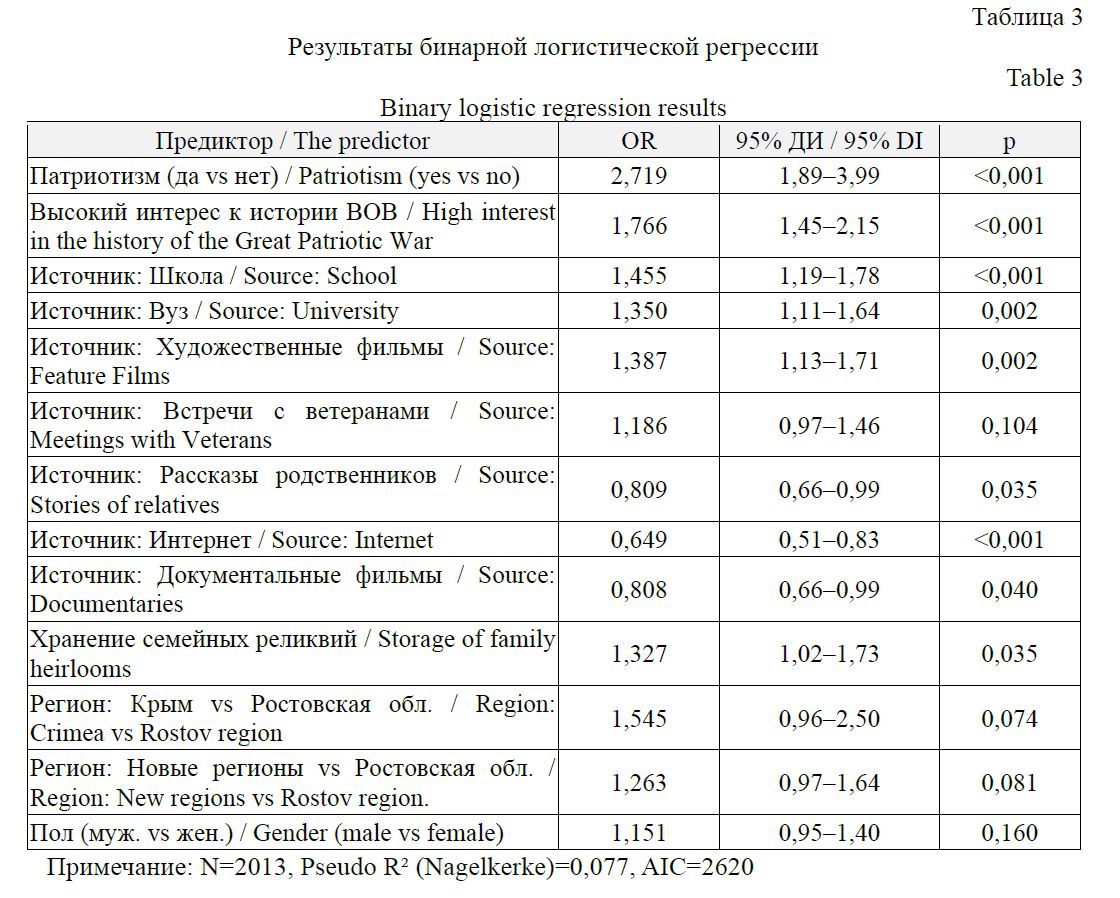
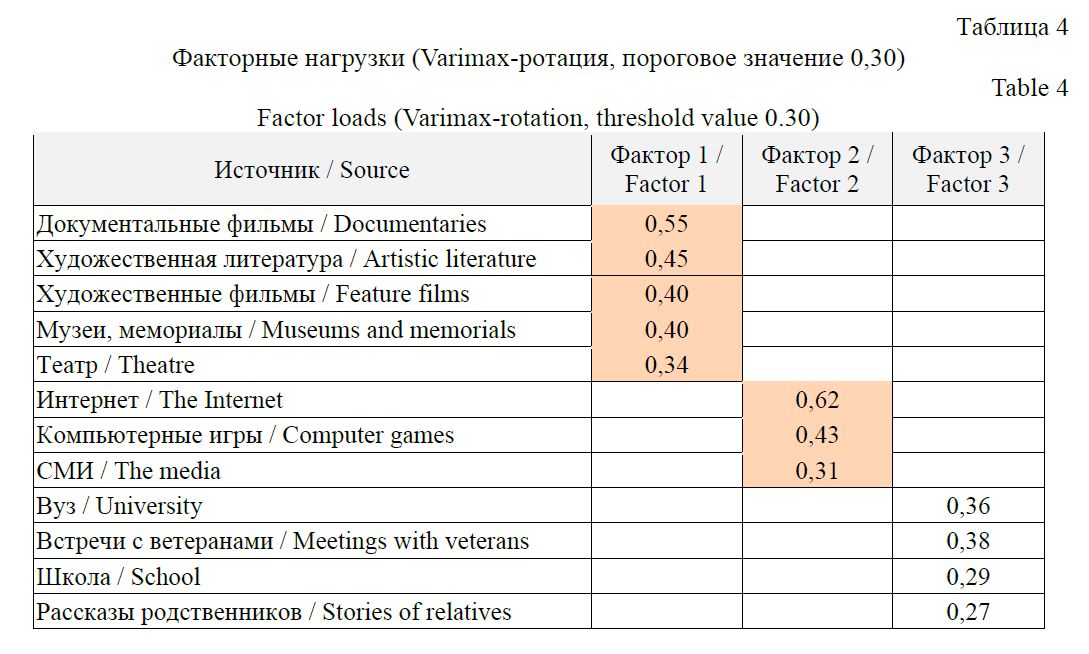
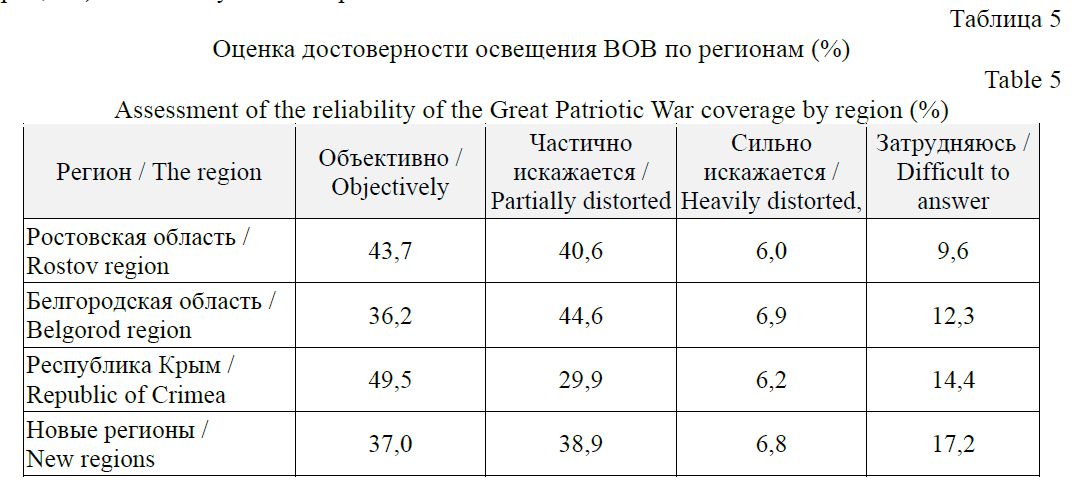
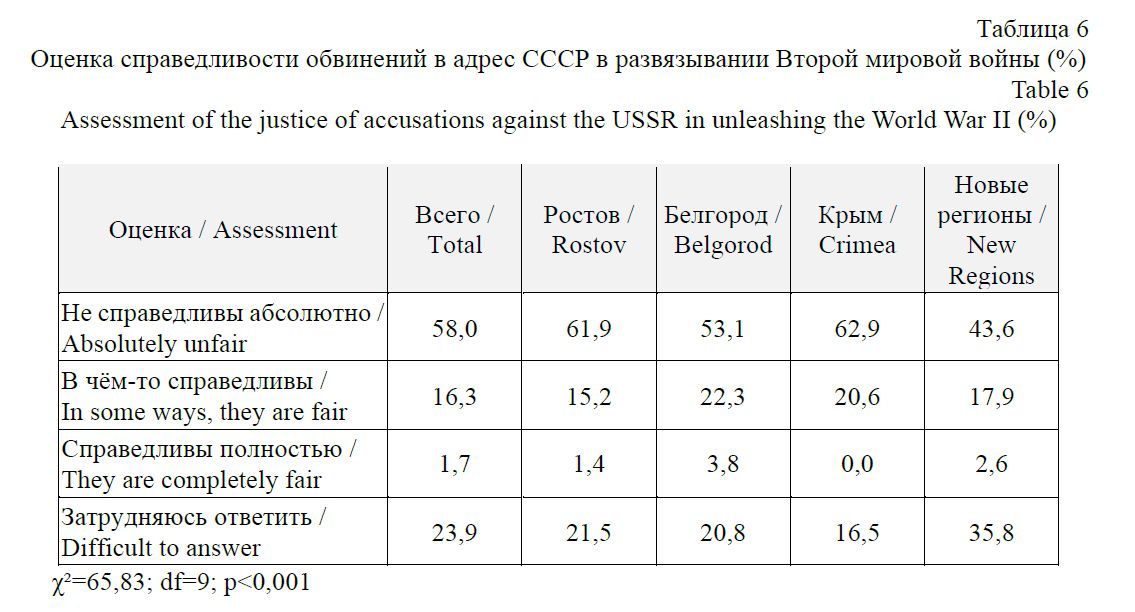
Amidst the transformation of collective memory transmission mechanisms and the transition from “living testimony” (communicative memory) to cultural memory mediated by institutions, the issue of information credibility acquires particular urgency. The relevance of the study is driven by the fact that today’s university students, acting as “digital natives”, shape their historical consciousness within a landscape of multiple interpretative models and an overabundance of contradictory information flows. In this context, the key research problem lies in the insufficient understanding of the factors that determine whether youth adopt strategies of critical reflection or trust toward historical content concerning the Great Patriotic War, as well as how specific regional trajectories of political socialization influence these processes. To address this issue, a sociological study was conducted (N=2272, January-February 2025, across 15 universities in five Russian regions). The findings, obtained through binary logistic regression, indicate that patriotic self-identification (OR=2.72; p<0.001) and a high interest in history (OR=1.77; p<0.001) serve as the strongest predictors of trust in the official narrative. It was established that institutional channels (universities, schools) strengthen trust in institutional narratives, whereas predominant reliance on Internet sources statistically significantly reduces it (OR=0.65; p<0.001). Factor analysis identified three types of students' information practices: cultural-educational, digital, and institutional. The empirical data suggest that patriotism in the youth environment functions as a cognitive filter for selecting and evaluating historical information. Despite the expansion of digital media, educational institutions maintain their status as “zones of trust” amidst the competition of narratives. The observed regional variability – ranging from high uncertainty in the newly incorporated regions to maximum trust in Crimea – underscores the final conclusion that the stability of youth historical consciousness is directly dependent on the specific local trajectories of political socialization.
Figures
Konstantinov, M. S., Filonenko, V. I. (2026), “Factors of historical information credibility assessment in student environment (Great Patriotic War representations)”, Research Result. Sociology and Management, 12 (2), 68-88, DOI: 10.18413/2408-9338-2026-12-2-0-5.















While nobody left any comments to this publication.
You can be first.
Arutyunova, E. M., Shchegolkova, E. Yu. (2026), “Russia is here for a long time”: perception of Russian identity among youth of new regions (case of DPR, LPR and Zaporizhzhia region)”, Gumanitariy Yuga Rossii, 15 (1), 16-34, DOI: 10.18522/2227-8656.2026.1.1, EDN: FACHXS. (In Russian)
Assman, J. (2004), Kulturnaya pamyat: Pismo, pamyat o proshlom i politicheskaya identichnost v vysokikh kulturakh drevnosti [Cultural Memory: Writing, Memory of the Past, and Political Identity in the High Cultures of Antiquity], transl. by Sokolskaya, M. M., Yazyki slavyanskoy kultury, Moscow, Russia, ISSN 1726-135X, ISBN 5-94457-176-4. (In Russian)
Vishnevskiy, Yu. R., Mansurov, V. A., Kulminskaya, A. V. (2025), “Students about WWII: results of a federal study”, Sotsiologicheskie issledovaniya, (7), 33-46, DOI: 10.31857/S0132162525070043, EDN: GZWLVT. (In Russian)
Brodovskaya, E. V., Dombrovskaya, A. Yu., Pyrma, R. V., Sinyakov, A. V., Azarov, A. A. (2019), “The impact of digital communications on the formation of professional culture of Russian youth: results of a comprehensive applied study”, Monitoring obshchestvennogo mneniya: ekonomicheskie i sotsialnye peremeny, (1), 228-251, DOI: 10.14515/monitoring.2019.1.11, EDN: GGPMUI. (In Russian)
Voina byla pozavchera… Rossiyskoe studenchestvo o Velikoy Otechestvennoy voyne: materialy monitoringa «Sovremennoe rossiyskoe studenchestvo o Velikoy Otechestvennoy voyne» [The war was the day before yesterday... Russian students on the Great Patriotic War: materials from the monitoring “Modern Russian students on the Great Patriotic War”] (2015), by Y. R. Vishnevsky (ed.), Ural University Publishing House, Yekaterinburg, Russia, ISBN: 978-5-7996-1472-0, EDN: TVCTZD. (In Russian)
Gorshkov, M. K., Barash, R. E. (2024), “Historical memory of modern Russians (20th century Russian history through family narratives)”, Sotsiologicheskie issledovaniya, (9), 125-137, DOI: 10.31857/S0132162524090119, EDN: MIDOFQ. (In Russian)
Gorshkov, M. K., Sheregi, F. E. (2010), Molodezh Rossii: sotsiologicheskiy portret [Youth of Russia: a sociological portrait], Moscow, Russia. (In Russian)
Gorshkov, M. K., Sheregi, F. E. (2020), Molodezh Rossii v zerkale sotsiologii: k itogam mnogoletnikh issledovaniy [Youth of Russia in the mirror of sociology: results of long-term studies], FNISTs RAN, Moscow, Russia, DOI: 10.19181/monogr.978-5-89697-325-6.2020, ISBN: 978-5-89697-325-6, EDN: BNSNDA. (In Russian)
Gudkov, L. D. (2005), “Memory” of war and mass identity of Russians, Pamyat o voyne 60 let spustya: Rossiya, Germaniya, Evropa [Memory of war 60 years later: Russia, Germany, Europe], by Gabovich, M. E. (ed.), NLO, Moscow, Russia, 83-103. (In Russian)
Dubin, B. V. (2004), “Bloody” war and “great” victory, Otechestvennye zapiski, (5), 68-84, EDN: YRMGHT. (In Russian)
Istoricheskaya pamyat o Velikoy Otechestvennoy voyne v protsesse sotsializatsii studentov Rostovskoy oblasti [Historical memory of the Great Patriotic War in the socialization of students of the Rostov region] (2023), by Filonenko, V.I. (ed.), Vol. 2, Southern Federal University Publishing House, Rostov-on-Don; Taganrog, Russia, EDN: NSLHDB. (In Russian)
Konstantinov, M. S., Potseluev, S. P., Podshibyakinа, T. A., Lukichev, P. N., Vnukova, L. B. (2021), Kognitivno-ideologicheskie matritsy vospriyatiya studentami Yuga Rossii sovremennykh sotsialno-politicheskikh krizisov [Cognitive-ideological matrices of perception by students of Southern Russia of modern socio-political crises], Southern Federal University Publishing House, Rostov-on-Don; Taganrog, Russia, DOI: 10.18522/801273594, ISBN: 978-5-9275-3835-5, EDN: FWYLHN. (In Russian)
Konstantinov, M. S., Lipets, E. Yu., Pupykhin, R. A., Tupaev, A. V. (2024), Kulturnye universalii v mirovozzrencheskoy paradigme sovremennogo rossiyskogo obshchestva [Cultural universals in the worldview paradigm of modern Russian society], Southern Federal University Publishing House, Rostov-on-Don; Taganrog, Russia, ISBN: 978-5-9275-4848-4, EDN: FCBJSY. (In Russian)
Lebedev, S. D., Shapovalova, I. S., Roshchupkina, N. A., Shkapenko, A. A. (2020), “Social trauma and generational values: WWII in student memory”, Research Result. Sociology and Management, 6 (2), 3-18, DOI: 10.18413/2408-9338-2020-6-2-0-1, EDN: KFEVFG. (In Russian)
Linchenko, A. A., Trutenko, E. V. (2024), “Commemorations of cancellation communities in digital conditions”, Antinomii, 24 (3), 83-100, DOI: 10.17506/26867206_2024_24_3_83, EDN: DEIMXI. (In Russian)
Malinova, O. Yu. (2015), Aktualnoe proshloe: simvolicheskaya politika vlastvuyushchey elity i dilemmy rossiyskoy identichnosti [The usable past: symbolic politics of ruling elites and dilemmas of Russian identity], Politicheskaya entsiklopediya, Moscow, Russia, ISBN: 978-5-8243-1952-1, EDN: UIAXZD. (In Russian)
Nora, P. (1999), “Between memory and history: lieux de mémoire”, Frantsiya-pamyat [France-memory], by Nora, P., Ozouf, M., de Puymège, J., Winock, M. (eds.), St. Petersburg University Press, St. Petersburg, Russia, 17-50. (In Russian)
Pamyat silnee vremeni: itogi V volny monitoringa [Memory is stronger than time: results of the 5th wave] (2025), by Vishnevskiy, Yu. R. (ed.) Ural University Press, Ekaterinburg, Russia, ISBN 978-5-7996-4066-8. (In Russian)
Proshloe dlya nastoyashchego: istoriya – pamyat i narrativy natsionalnoy identichnosti [The past for the present: history, memory and narratives of national identity] (2020), by Repina, L. P. (ed.), Akvilon, Moscow, Russia, ISBN 978–5–906578–63–1. (In Russian)
Repina, L. P. (2005), “Concepts of social and cultural memory in modern historiography”, Fenomen proshlogo [The phenomenon of the past], by Saveleva I. M., Poletaev A. V. (eds.), HSE Publishing House, Moscow, Russia, 122-169. (In Russian)
Aivazyan, A. A. et al. (2011), Sovremennoe rossiyskoe studenchestvo: istoricheskaya pamyat o Velikoy Otechestvennoy voyne i formirovanie patriotizma i grazhdanstvennosti: monografiya [Contemporary Russian Students: Historical Memory of the Great Patriotic War and the Formation of Patriotism and Civic Consciousness: A Monograph], by Y. R. Vishnevsky (ed.), Ural University Publishing House, Yekaterinburg, Russia. (In Russian)
Spasibo pradedu za Pobedu…: monografiya po materialam monitoringa «Rossiyskoe studenchestvo o Velikoy Otechestvennoy voyne» (2005–2010–2015–2020 gg.) [Thank you to my great-grandfather for the Victory...: a monograph based on the monitoring data “Russian Students on the Great Patriotic War” (2005-2010-2015-2020)] (20202), ed. by Yu. R. Vishnevsky; Ministry of Science and Higher Education of the Russian Federation, the First President of Russia B. N. Yeltsin Ural Federal University, Russian Society of Sociologists, Ural University Press, Yekaterinburg, Russia, ISBN 978-5-7996-3087-4. (In Russian)
Toshchenko, Zh. T. (2000), “Historical consciousness and historical memory: current state analysis”, Novaya i noveyshaya istoriya, (4), 3-14, EDN: RGEDNB. (In Russian)
Filonenko, V. I., Shtompel, L. A., Magranov, A. S., Shtompel, O. M., Nikulina, M. A., Tkachev, M. V. (2015), Velikaya Otechestvennaya voyna v predstavleniyakh uchashchikhsya vuzov: formirovanie rossiyskoy grazhdanskoy identichnosti [The Great Patriotic War in students perceptions: formation of Russian civic identity], Southern Federal University Publishing House, Rostov-on-Don, Russia, ISBN: 978-5-9275-1703-9, EDN: VHVRMB. (In Russian)
Khalbwachs, M. (2005), “Collective and historical memory”, Neprikosnovennyy zapas, 2-3 (40-41), available at: https://magazines.gorky.media/nz/2005/2/kollektivnaya-i-istoricheskaya-pamyat.html (Accessed 28 December 2025). (In Russian)
Khalbwachs, M. (2007), Sotsialnye ramki pamyati [On collective memory], Novoe izdatelstvo, Moscow, Russia, ISBN: 978-5-98379-088-9, EDN: QXSOXF. (In Russian)
Shapovalova, I. S. (2016), “Patriotic attitudes of regional youth”, Vestnik pedagogicheskikh innovatsiy, (4(44)), 47-54. EDN: XDXZXH, (In Russian)
Confino, A. (1997), “Collective Memory and Cultural History: Problems of Method”, The American Historical Review, 102(5), 1386-1403.
Olick, J. K. (1999), “Collective Memory: The Two Cultures”, Sociological Theory, 17(3), 333-348.
Schatz, R. T., Staub, E., Lavine, H. (1999), “On the Varieties of National Attachment: Blind Versus Constructive Patriotism”, Political Psychology, 20(1), 151-174.
Wertsch, J. V. (2002), Voices of Collective Remembering, Cambridge University Press, Cambridge, UK.
Winter, J. (2006), Remembering War: The Great War between Memory and History in the Twentieth Century, Yale University Press, New Haven, USA.