

The role of historical memory capital of the Great Victory in the legitimation of state policy in the consciousness of student youth
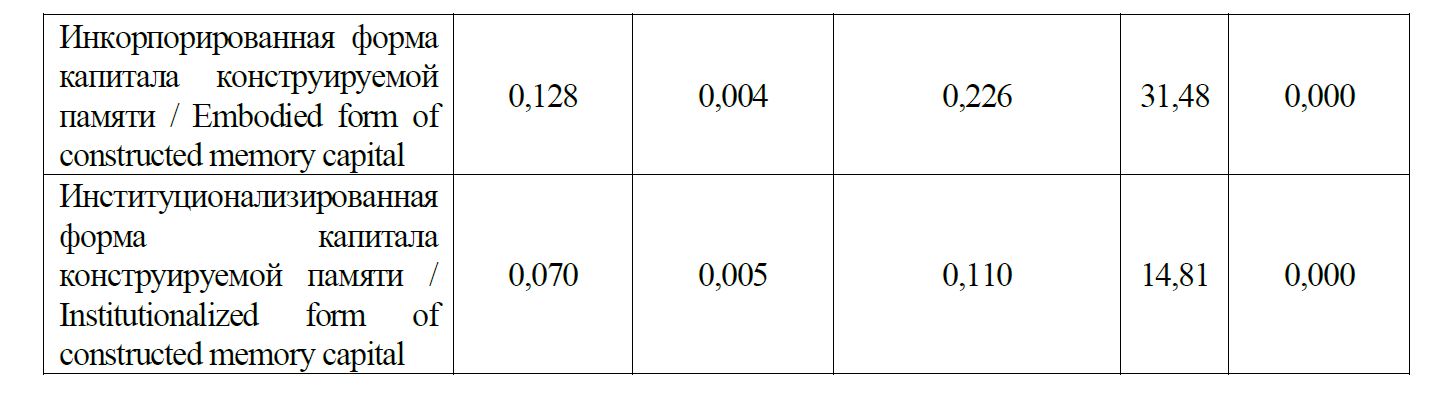
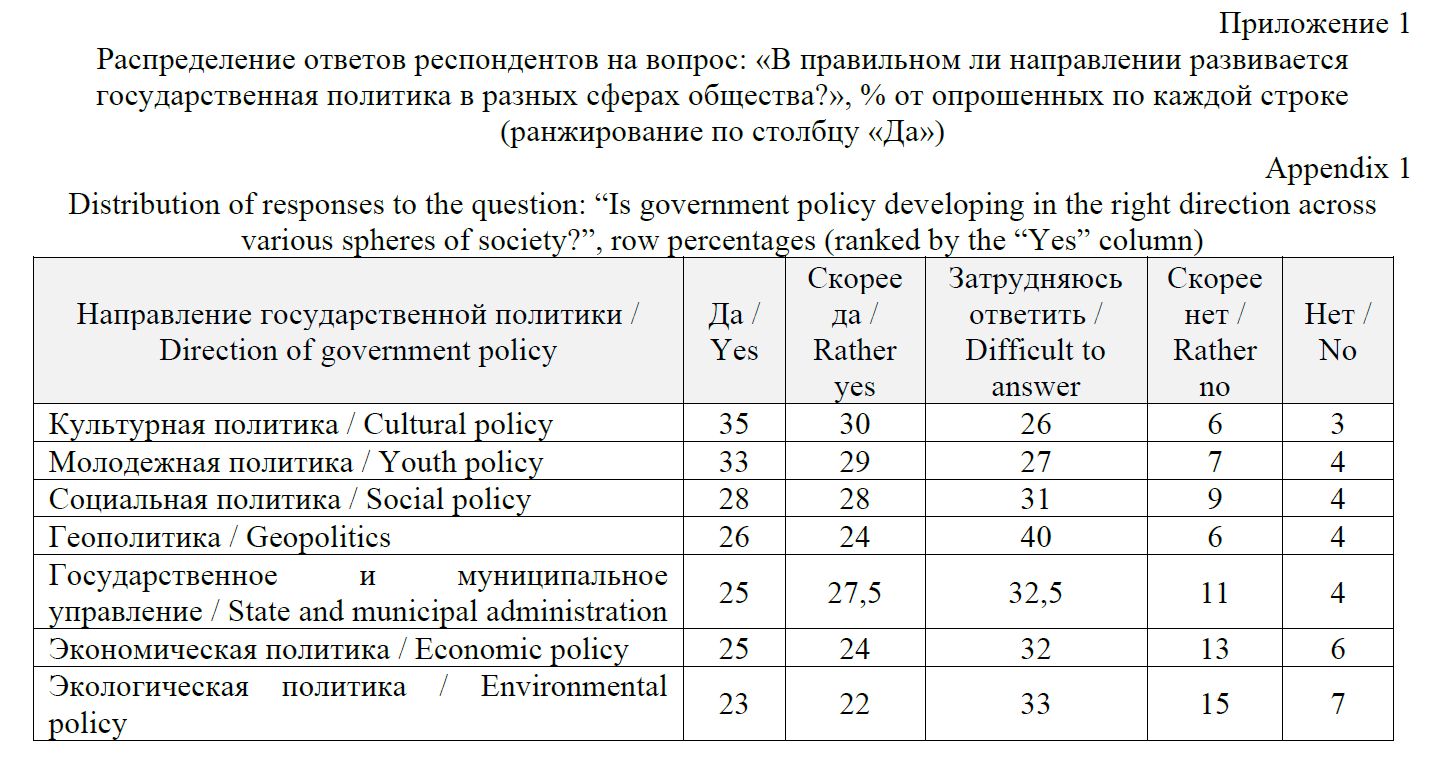
This article explores how the capital of historical memory of the Great Patriotic War influences the perception of implemented state policy among university students. The official narrative of the Great Victory, while remaining a key instrument of the state's memory politics, faces challenges from digitalization, the weakening of intergenerational family transmission of memory, and competition from alternative interpretations of the past. The authors analyze how the capital of historical memory is converted into the legitimation of power, contributing to an increase in youth loyalty towards the authorities. The research is based on Pierre Bourdieu's concept of cultural capital, which operates within the context of natural and constructed memory through its three states: objectified, embodied and institutionalised. The empirical basis of the study comprises data from the 5th wave of the monitoring project “Russian University Students about the Great Patriotic War” (2025), which covered 19,236 respondents from 82 higher education institutions across all federal districts. Non-parametric methods for assessing relationships and multiple linear regression were used for analysis. The results showed that institutionally constructed memory has a stronger influence on political loyalty than natural memory. The most significant impact comes from the embodied form of historical memory capital: its absence among university students increases the likelihood of disagreement with the implemented state policy. The strategy of actively using historical memory as a role model correlates with a high level of support for the authorities (0.70), while strategies of loss or alienation reduce this to 0.54. The authors conclude that historical memory remains a crucial sociocultural resource for legitimation, but the degree of its impact depends on the ability of the state and educational institutions to transform external meanings into the internal convictions of young people.
Figures
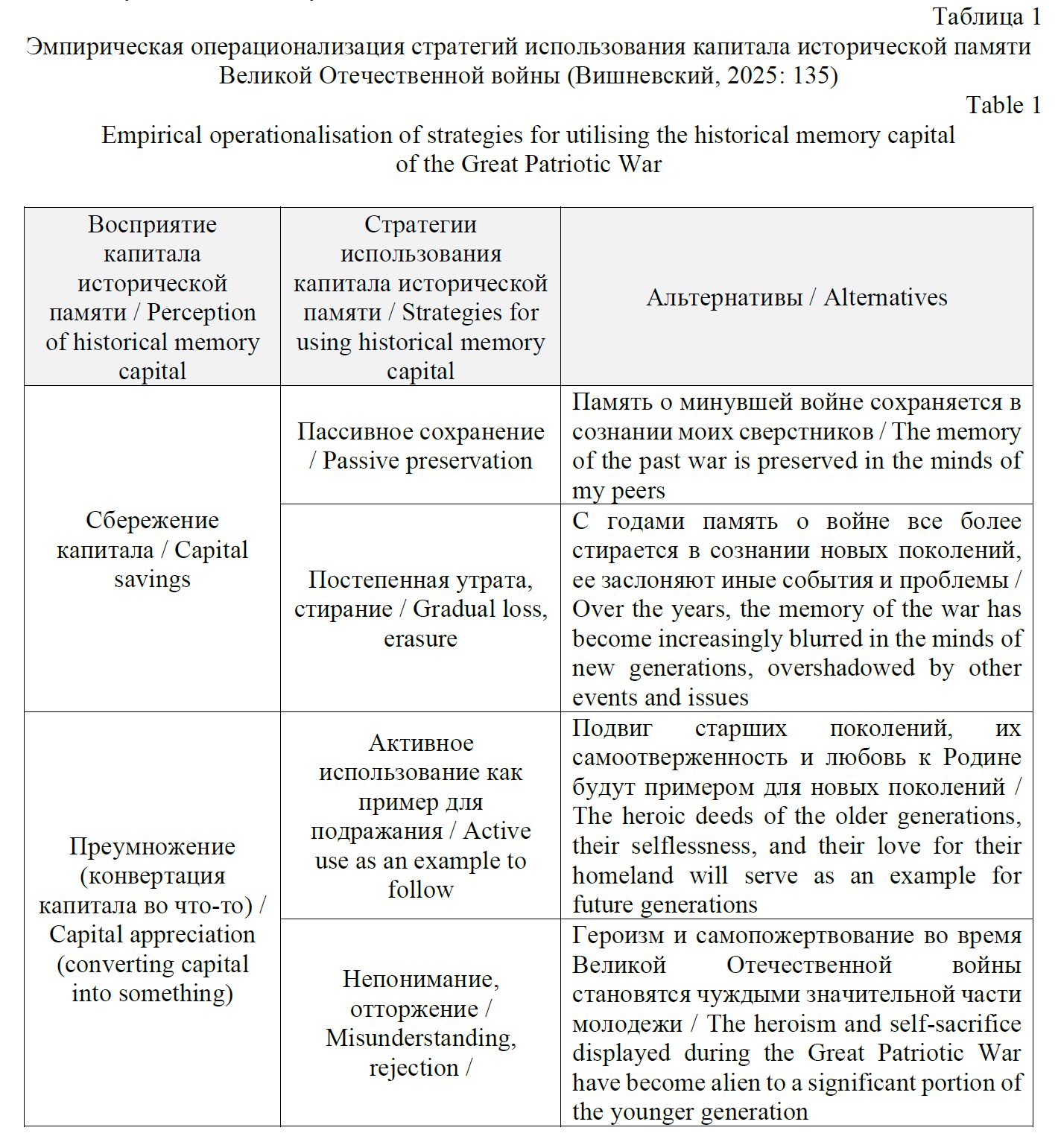
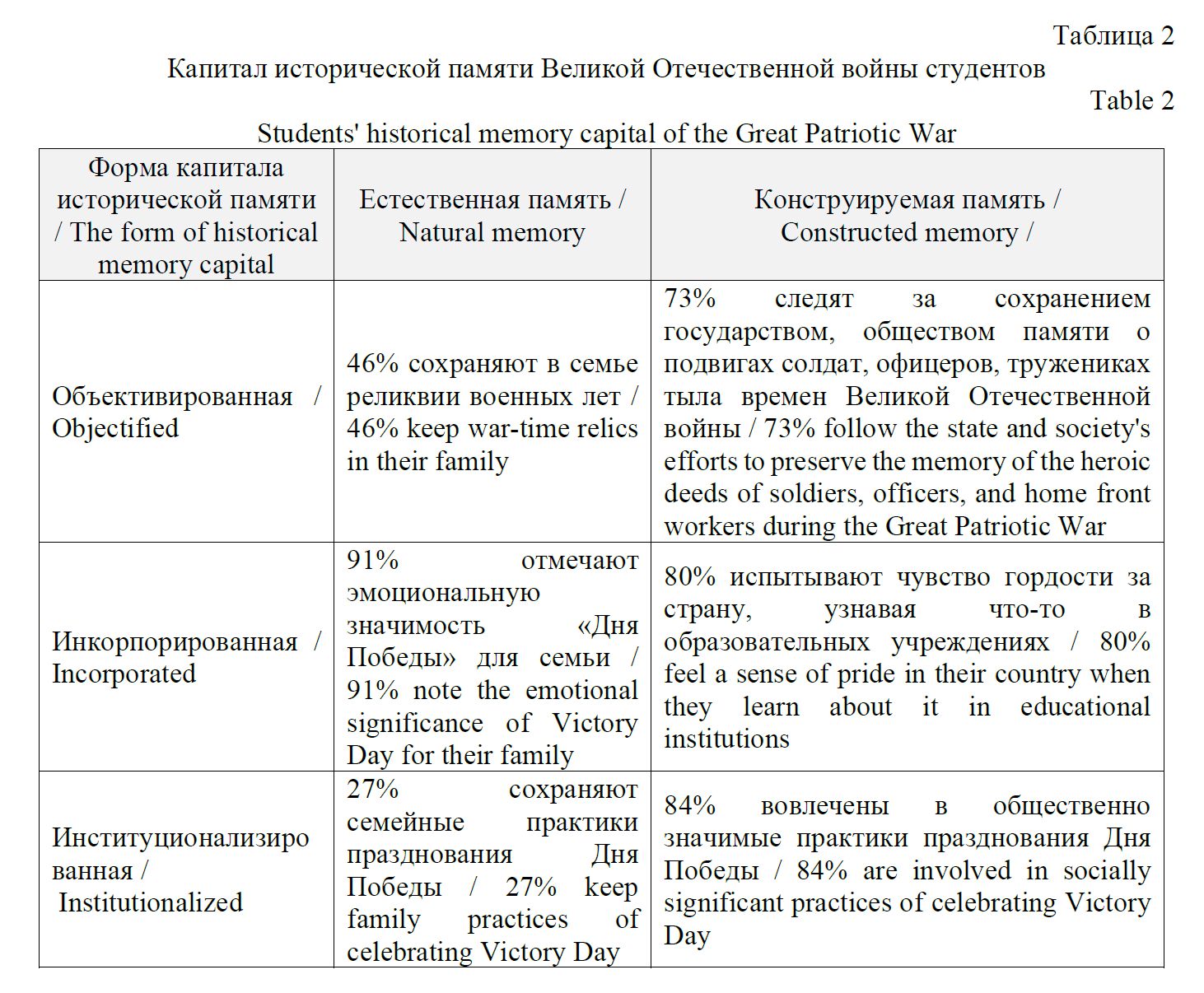
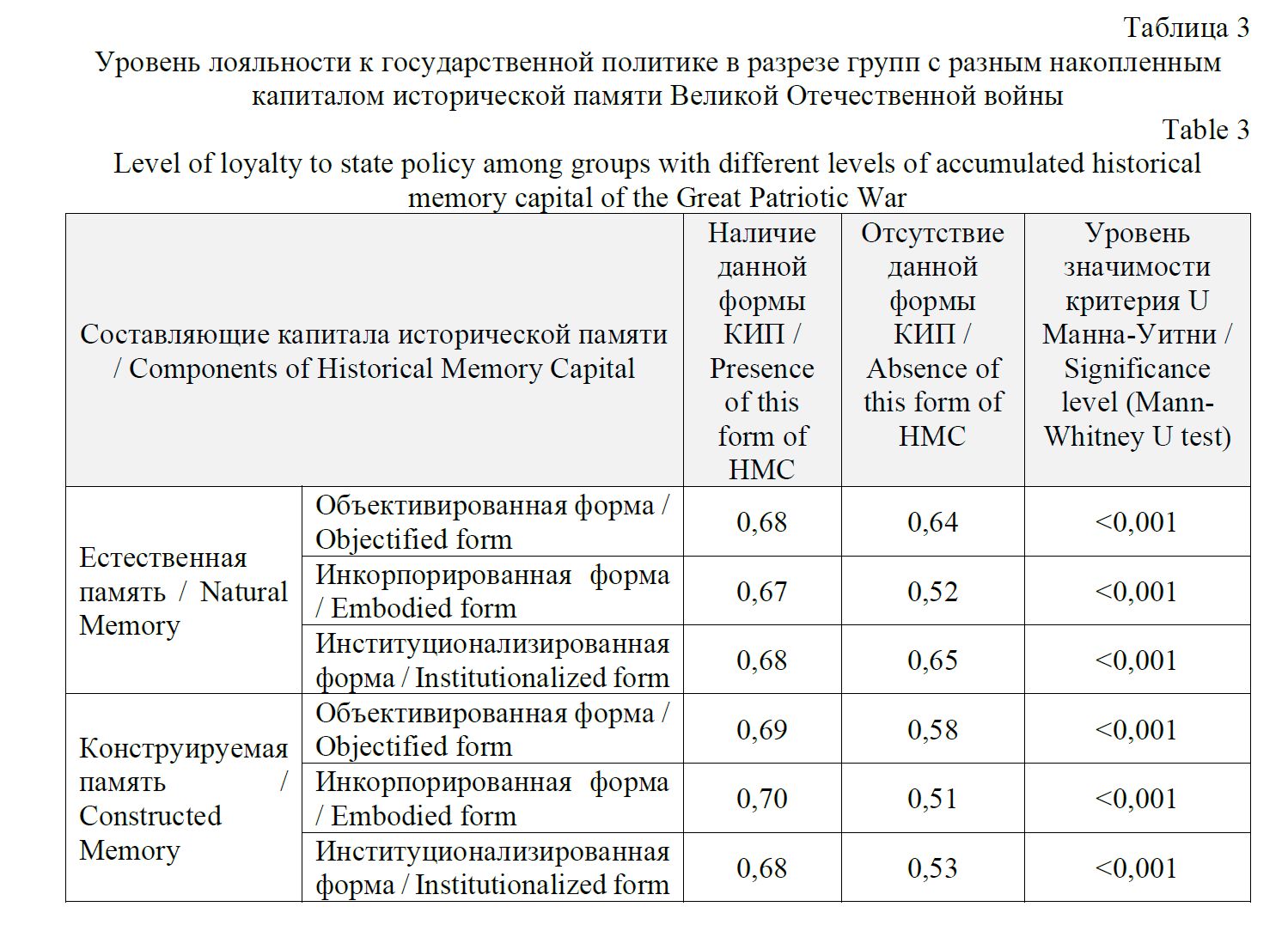
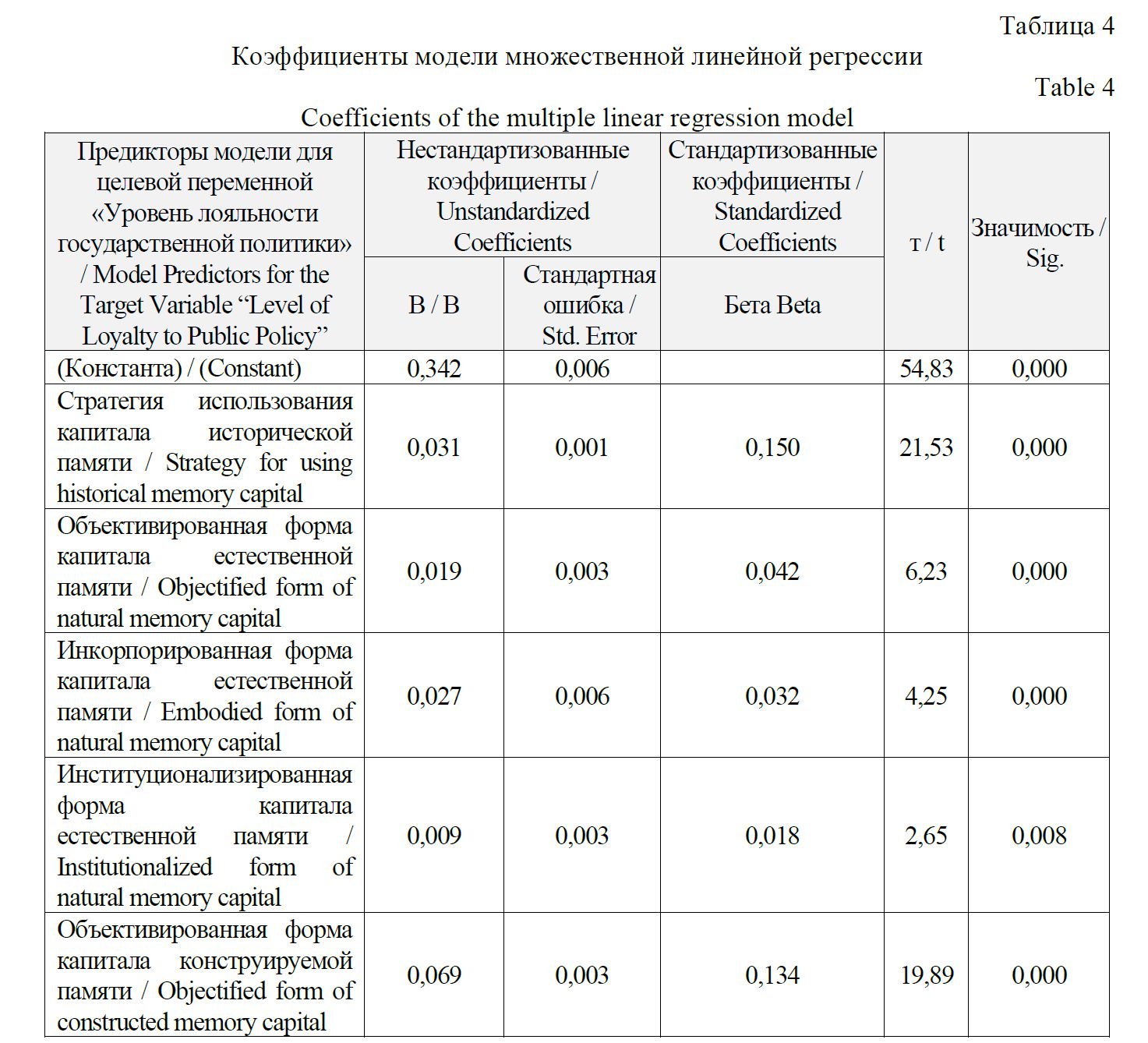
Vishnevsky, Yu. R., Tarasova, A. N., Pochatkova E. I. (2026), “The role of historical memory capital of the Great Victory in the legitimation of state policy in the consciousness of student youth”, Research Result. Sociology and Management, 12 (2), 32-46, DOI: 10.18413/2408-9338-2026-12-2-0-3















While nobody left any comments to this publication.
You can be first.
Aryasova, A. Y. (2024), “Historical memory of the Second World War in sociological research”, Missiya konfessiy, 13 (4), 63-67, EDN: IHVCKR. (In Russian)
Belova, T. P. (2022), “The religious factor of the historical memory of Russian students about the Great Patriotic War”, Research Result. Sociology and management, 8 (4), 9-21, DOI: 10.18413/2408-9338-2022-8-4-0-2, EDN: TUPFBD. (In Russian)
Bogatova, O. A., Dadaeva, T. M. and Shumkova, N. V. (2024), “Student Youth in the Space of Historical Practices and Narratives (Regional Dimension)”, Integratsiya obrazovaniya, 28 (1), 98-110, DOI: 10.15507/1991-9468.114.028.202401.098-110, EDN: OUDCSL. (In Russian)
Velikaya, N. M., Goloseyeva, A. A. and Irsetskaya, E. A. (2025), “Narratives of Post-Memory: the Representation of the Great Patriotic War in the Family Memory of Three Generations”, Sociological Studies, (5), 14-28, DOI: 10.31857/S0132162525050027. (In Russian)
Vishnevsky, Yu. R., Мansurov, V. А. and Kulminskaia, A. V. (2025), “Russian Students about the Great Patriotic War: Results of the Federal Research of the Russian Society of Sociologists (2005-2025)”, Sociological Studies, (7), 33-46, DOI: 10.31857/S0132162525070043. (In Russian)
Zubok, Yu. A. andd Lyubutov, A. S. (2022), “Youth in the Socio-Cultural Reality of Russian Society: Semantic Determinants of Self-Regulation”, in Gorshkov, M. K. (ed.), Rossiya reformiruyushchayasya: ezhegodnik: vyp. 20 [Russia under Reform: Yearbook: Issue 20], Novy Khronograf, Moscow, Russia, 339-378, DOI: 10.19181/ezheg.2022.13. (In Russian)
Moskalev, G. L. (2022), “Protection of Historical Truth: a New Task of Russian Law”, Zhurnal Sibirskogo federalnogo universiteta. Seriya: Gumanitarnye nauki, 15 (8), 1070-1081, DOI: 10.17516/1997-1370-0910. (In Russian)
Nikulin, V. A. (2025), “New Forms of Accumulation and Transformation of Historical Memory into Social Capital in Modern Russian Society”, Sotsiologiya, (11), 172-175, EDN: OYNFQI. (In Russian)
Pamyat silnee vremeni: itogi V volny monitoringa «Rossiyskoe studenchestvo o Velikoy Otechestvennoy Voyne» (2005–2010–2015–2020–2025 gg.): monografiya [Memory is stronger than time: results of the 5th wave of monitoring “Russian students about the Great Patriotic War” (2005–2010–2015–2020–2025): monograph], (2025), by Vishnevsky, Yu. R. (ed.), Izdatelstvo Uralskogo federalnogo universiteta, Yekaterinburg, Russia. (In Russian)
Pivavarchyk, C. A. (2022), “Historical-Cultural Heritage and Commemorative Practices in the Formation of the Historical Memory of the Youth”, Sovremennaya molodezh i obshhestvo, (10), 79-83, EDN: QFYCJV. (In Russian)
Radaev, V. V. (2002). “The Concept of Capital, Forms of Capital and Their Conversion”, Journal of Economic Sociology, (4), 20-32, EDN: OYUVFF. (In Russian)
Lebedev, S. D., Shapovalova, I. S., Roshchupkina, N. A. and Shkapenko, A. A. (2020), “Social trauma and values of generations: The Great Patriotic War in the historical memory of students”, Research Result. Sociology and Management, 6 (2), 3-18, DOI: 10.18413/2408-9338-2020-6-2-0-1, EDN: KFEVFG. (In Russian)
Kargapolova, E. V., Koshkin, A. P., Pritulenko, M. S. and Khimich, V. S. (2025), “I am a Patriot”: Coordinates of the Status Position of Russian Students (on the Example of Moscow Universities)”, Tyumen State University Herald. Social, Economic, and Law Research, 11 (2), 42-67, DOI: 10.21684/2411-7897-2025-11-2-42-67. (In Russian)
Gusevskaya, N. and Plotnikova, E. (2020), “Historical memory and national identity. Advances in social science, education and humanities research”, Atlantis Press, 505, 1026-1030.
Mayer, M. and Pawlik, K. (2023), “Politics of memory, heritage, and diversity in modern China”, Journal of Current Chinese Affairs, 52 (2), 139-162. DOI: 10.1177/18681026231204890.
The study was supported by the Russian Science Foundation, Project № 25-28-00900. https://rscf.ru/project/25-28-00900/.