
Religious changes in Serbia: The return of Orthodoxy to the public stage?
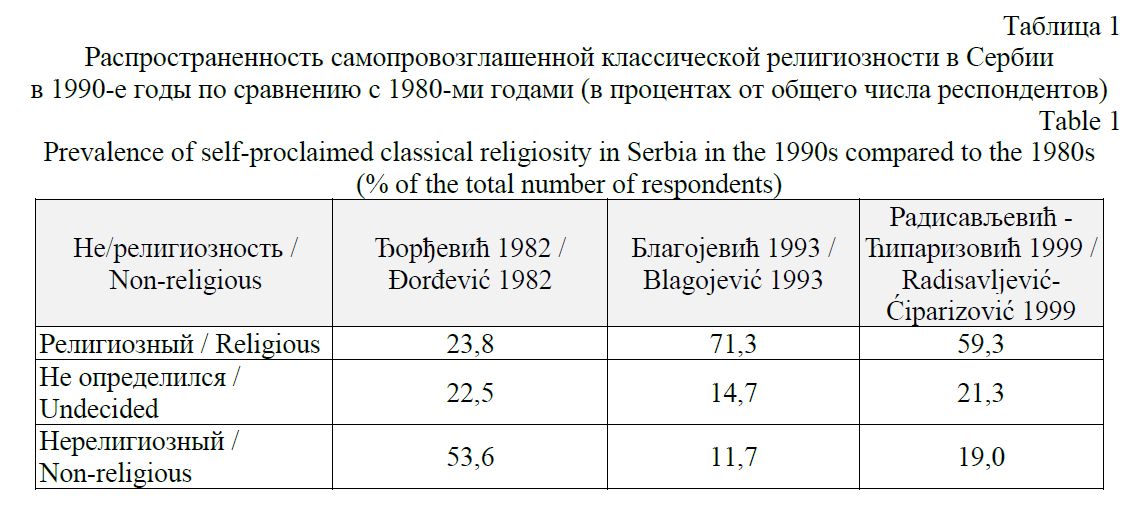
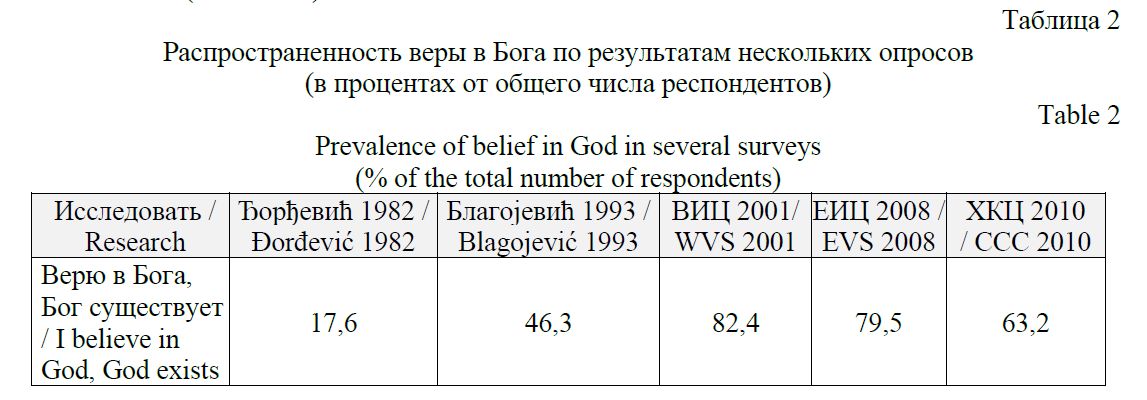
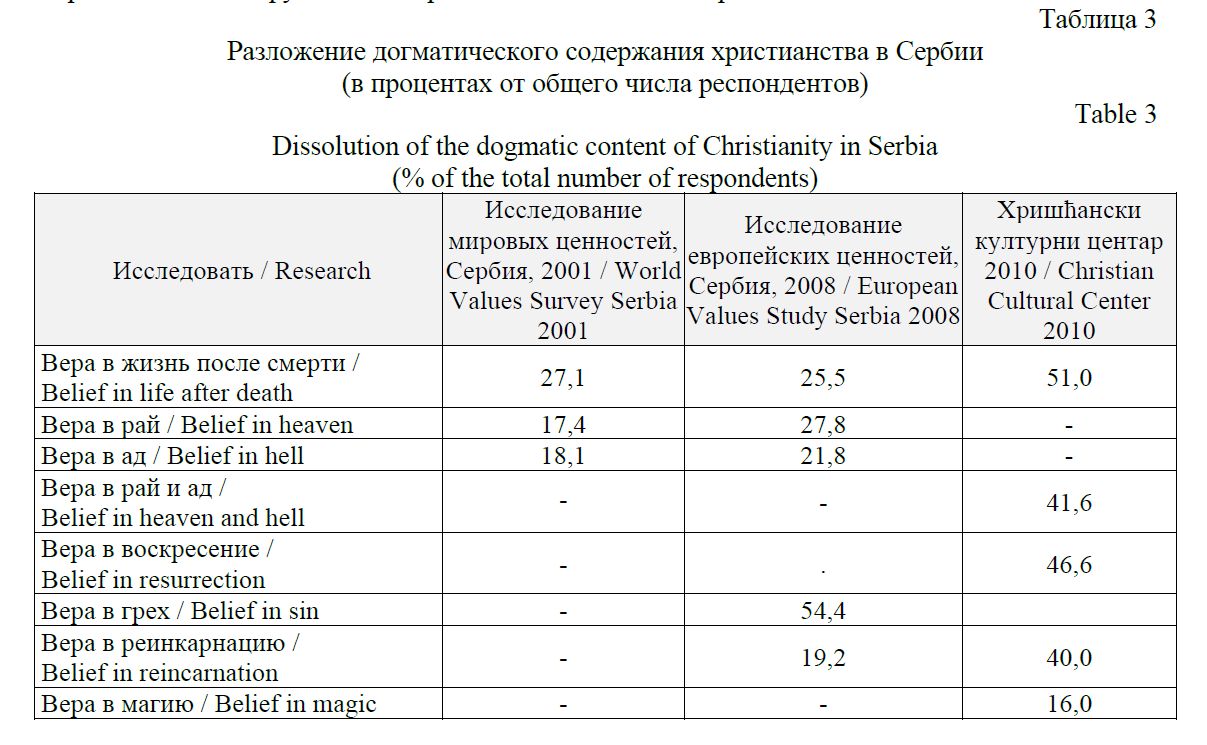
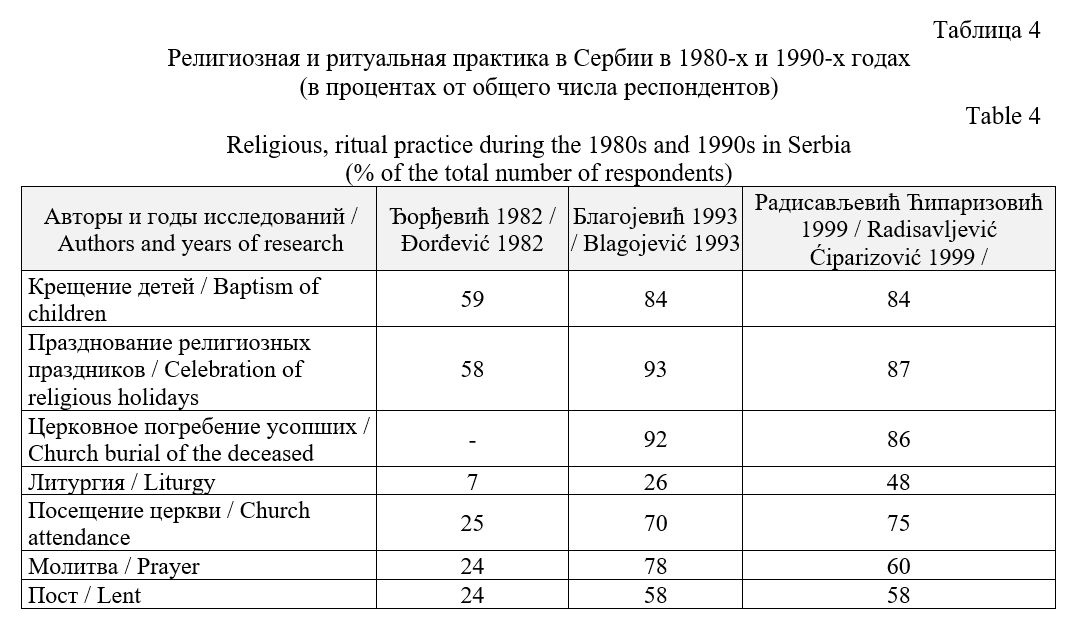
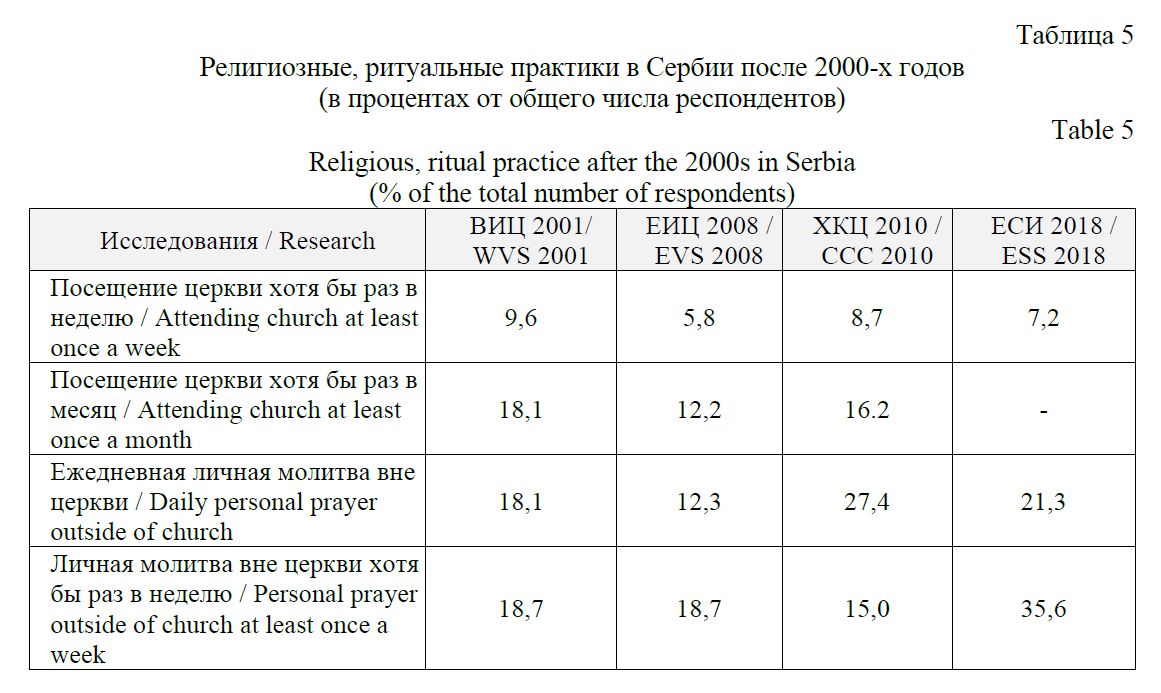
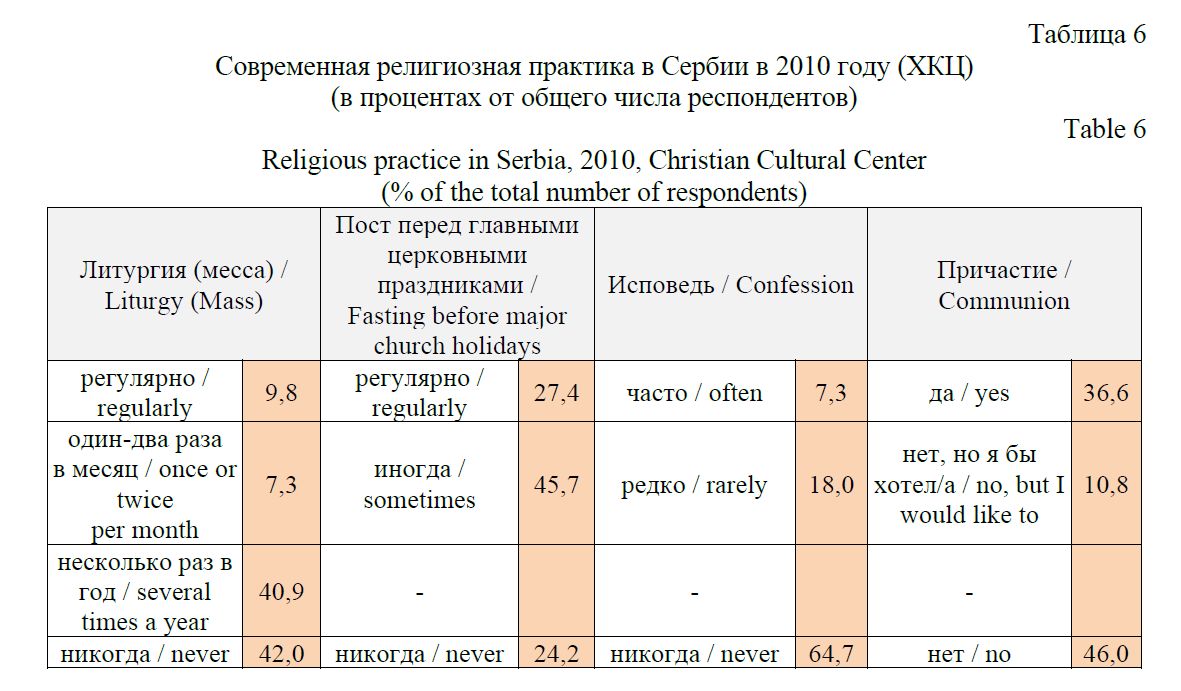
The question of Orthodox revival in Serbian society is a current topic in the domestic academic community, particularly in the context of the social transformations of the late 20th century. Scholars disagree on the extent and nature of the renewal of religiosity in Serbia. This study focuses on distinguishing between two key concepts: the return of religion to Serbian public life as an institutional and cultural phenomenon, and the individual’s turn to religion and the Church as a personal spiritual practice. This distinction constitutes the central research problem of the study. The authors analyze data from numerous sociological studies and public opinion surveys & polls on religiosity, as well as a historical overview of the degree of public commitment to religion and the Church throughout the 20th century. Based on an analysis of empirical data on people’s relationship to Orthodoxy and the Church from the late 1980s and early 1990s to the present, the authors offer a comprehensive assessment (diagnosis) of the state of religiosity in contemporary Serbian society. Through a synthesis of findings from multiple studies, the authors identify both the achievements and the limitations of the Orthodox revival in Serbia, providing a balanced evaluation of this social phenomenon.
Figures
Blagojević, M. Lj., Ćumura, L. D. (2026), “Religious changes in Serbia: The return of Orthodoxy to the public stage?”, Research Result. Sociology and Management, 12 (3), 116-133. DOI: 10.18413/2408-9338-2026-12-3-0-8.












While nobody left any comments to this publication.
You can be first.
Blagoevich, M. and Matich, Z. (2017), “Religious changes: Orthodox catechesis in the school system of the Republic of Serbia (2001–2017)”, Nauchnyy rezultat. Sotsiologiya i upravleniye, 3(4/14), 3-12, DOI: 10.18413/2408-9338-2017-3-4-3-12, EDN: YWYLNB. (In Russian)
Lebedev, S. (2010), “Paradoxes of religiosity in the world of late modernity”, Sotsiologicheskie issledovaniya, (12), 85-93, EDN: NCHJLH. (in Russian)
Lebedev, S., Blagoevich, M., Šapovalova, L. (2023), “Revitalization of religion: understanding the prospects of the modern religious situation”, Sociologičeskie issledovaniya, (8), 60-75, DOI: 10.31857/S013216250027367-6, EDN: FDKHAO. (In Russian)
Filatov, S. B. and Lunkin, R. N. (2005), “Statistics of Russian religiosity: the magic of numbers and ambiguous reality”, Sotsiologicheskiye issledovaniya, (4), 35-45, EDN: OOUKPB. (in Russian)
Baćević, Lj. (1964), “Some aspects of the state of the religious phenomenon in our society”, Jugoslovensko javno mnenje o aktuelnim političkim i društvenim pitanjima [Yugoslav public opinion on current political and social issues], Sveska A-4. IDN; Centar za istraživanje javnog mnjenja, Beograd.
Berger, P. L. and Luckmann, T. (1992), Socijalna konstrukcija zbilje [The Social Construction of Reality], Naprijed, Zagreb.
Berger, P. L. (ed.) (1999), The Desecularization of the World: Resurgent Religion and World Politics, Eerdmans Publishing Company, New York.
Blagojević, M. (1995), Približavanje pravoslavlju [Approaching Orthodoxy], JUNIR; Gradina, Niš.
Blagojević, M. (2005), Religija i crkva u transformacijama društva [Religion and Church in the Transformations of Society], Institut za filozofiju i društvenu teoriju; IP Filip Višnjić, Beograd, ISBN: 86-82417-09-X, EDN: PDAYZM.
Blagojević, M. (2015), Vitalnost religije u (de)sekularizovanom društvu [The Vitality of Religion in a (De)secularized Society], Institut društvenih nauka, Beograd.
Blagojević, M. and Jovanović-Ajzenhamer, N. (2021), “Religiosity in Serbia and Other Religiously Homogeneous European Societies: A Comparative Perspective”, Sociologija, LXIII (2).
Blagojević, M. and Ćumura, Lj. (2025), “The Dynamics of (De)Secularisation Processes in Serbia and Malta over the Past Three Decades”, Multidisciplinary Journal of Science, Education and Art, 23-45, Union of Scientists in Bulgaria – Branch Blagoevgrad.
Bruce, S. (2011), Secularization: In Defence of an Unfashionable Theory, Oxford University Press, Oxford.
Buhagiar, L. J., Pulis, M. and Ćumura, Lj. (2025), “Prayer Intensity, Technological Mediation, and Civic Engagement: Comparing Catholic, Lutheran, and Orthodox Contexts”, Religions, 16(7), 904, DOI: 10.3390/rel16070904, EDN: DXJTXT.
Casanova, J. (1994), Public Religions in the Modern World, University of Chicago Press, Chicago.
Cvitković, I. (2009), “Has the 'Return' of Religions Occurred or 'Return' to the Religion?”, Revitalization of Religion: Theoretical and Comparative Approaches, ed. by Gavrilović, D., YSSS Annual, Year XVI. Niš.
Đorđević, D. B. (1984), Beg od crkve [Escape from the Church], Nota, Knjaževac.
Đorđević, D. B. (1990), O religiji i ateizmu [On Religion and Atheism], Gradina, Niš; Stručna knjiga, Beograd.
Đorđević, D. B. (1992), “Orthodoxy between Heaven and Earth”, Gradina, 10-12.
Đorđević, D. B. (2001), “The Classical Religiosity of the Roma”, JUNIR godišnjak VIII: Vera manjima i manjinske vere [JUNIR Yearbook VIII: Faith of Minorities and Minority Faiths], JUNIR; ZOGRAF, Niš.
Đorđević, M. (2005а), “The Temptations of Clericalization”, Republika, (352-353(1-31 March)).
Đorđević, M. (2005b), “Secularism and Clericalism”, Republika, (370-371 (1-31 December)).
European Social Survey (2018), available at: https://ess.sikt.no/en/?tab=overview (Accessed 15 January 2026).
European Values Study, Serbia (2008), Database at the Institute for Philosophy and Social Theory, Beograd.
Flere, S. and Pantić, D. (1977), Ateizam i religioznost u Vojvodini [Atheism and Religiosity in Vojvodina], Pravni fakultet; Institut društvenih i pravnih nauka, Novi Sad.
Habermas, J. (2005), Zwischen Naturalismus und Religion – Philosophische Aufsätze [Between Naturalism and Religion: Philosophical Essays], Suhrkamp, Frankfurt am Main.
Lebedev, S., Blagojević, M. and Pokaninova, E. (2020), “A value-reflective approach to indicators of Orthodox religiosity of the population”, Stanovništvo, 58(1), 47-61, DOI: 10.2298/STNV200322002L, EDN: FPHSTC
McAndrew, S. and Voas, D. (2011), “Measuring Religiosity using Surveys”, SQB Topic Overview, 4, 1-15.
Pantić, D. (1974), Intenzitet religiozne i nereligiozne orijentacije u Beogradu [The Intensity of Religious and Non-Religious Orientation in Belgrade], IDN; Centar za istraživanje javnog mnenja, Beograd.
Pavićević, A. (2023), “Orthodoxy in Serbia from the 1990s to the present: beliefs and practices of church members”, Zbornik Matice srpske za društvene nauke, LXXIV, 188(4/2023).
Popis stanovništva, domaćinstava i stanova [Census of Population, Households and Dwellings (2002), Republički zavod za statistiku, Beograd.
Popis stanovništva, domaćinstava i stanova [Census of Population, Households and Dwellings] (2011). Republički zavod za statistiku, Beograd, available at: https://data.stat.gov.rs/Home/Result/3102010402?languageCode=sr-Latn (Accessed 20 December 2025).
Popis stanovništva, domaćinstava i stanova [Census of Population, Households and Dwellings] (2022), Republički zavod za statistiku, Beograd, available at: https://www.stat.gov.rs/vesti/20230616-st/ (Accessed 20 December 2025).
Pulis, M., Ćumura, Lj. and Buhagiar, L. (2024), “Prayer, civic engagement and culture: A comparative study of Serbia and Malta”, Sociološki pregled, 58(2), 370-401, DOI: 10.5937/socpreg58-49169, EDN: FHYUZT.
Radisavljević-Ćiparizović, D. (2011), “Religiosity of Serbian citizens and their attitude towards the EU: a sociological perspective”, Religioznost građana Srbije i njihov odnos prema procesu evropskih integracija [Religiosity of Serbian Citizens and their Attitude towards the European Integration Process], Hrišćanski kulturni centar; Centar za evropske studije; Fondacija Konrad Adenauer, Beograd.
Religioznost u Srbiji 2010 [Religiosity in Serbia 2010] (2011), Center for European Studies; Hrišćanski kulturni centar; Konrad Adenauer Stiftung, Beograd.
Taylor, C. (2007), A Secular Age, Harvard University Press, Cambridge, MA.
Vukomanović, M. (2001), Sveto i mnoštvo – izazovi religijskog pluralizma [The Sacred and the Multitude: Challenges of Religious Pluralism], Čigoja štampa, Beograd.
Vukomanović, M. (2013), “Revitalization of religion in Serbia and the concept of multiple modernities”, Promene osnovnih struktura društva Srbije u periodu ubrzane transformacije [Changes in the Basic Structures of Serbian Society in the Period of Accelerated Transformation], eds. by Lazić, M. and Cvejić, S., ISI FF, Beograd.
Wilson, B. R. (2016), Religion in Secular Society: Fifty Years On, Oxford University Press, Oxford.
World Values Survey (2001), available at: www.worldvaluessurvey.org (Accessed 5 January 2026).
This article was written as part of the research program of the Institute of Social Sciences, an institute of national importance, for the year 2026, with the support of the Ministry of Science, Technological Development, and Innovation of the Republic of Serbia.