

Matrimonial strategies in the life planning system of youth
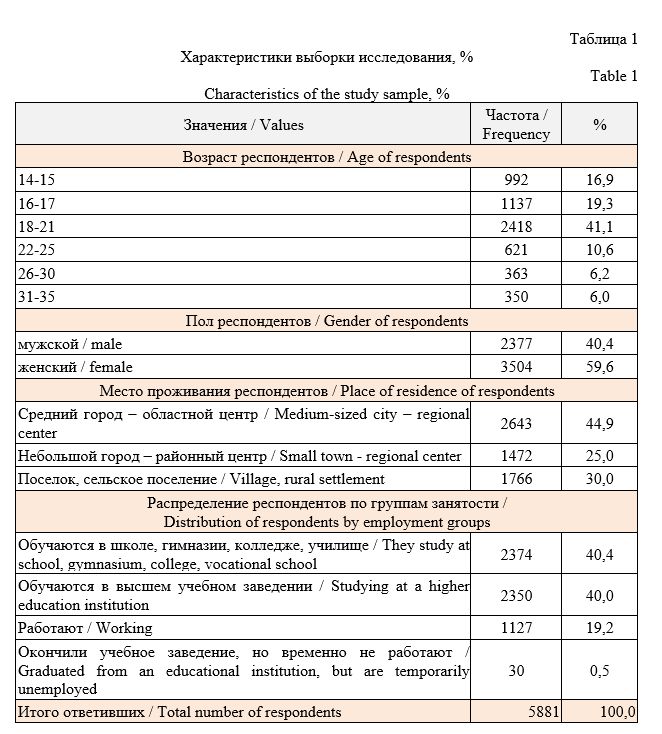
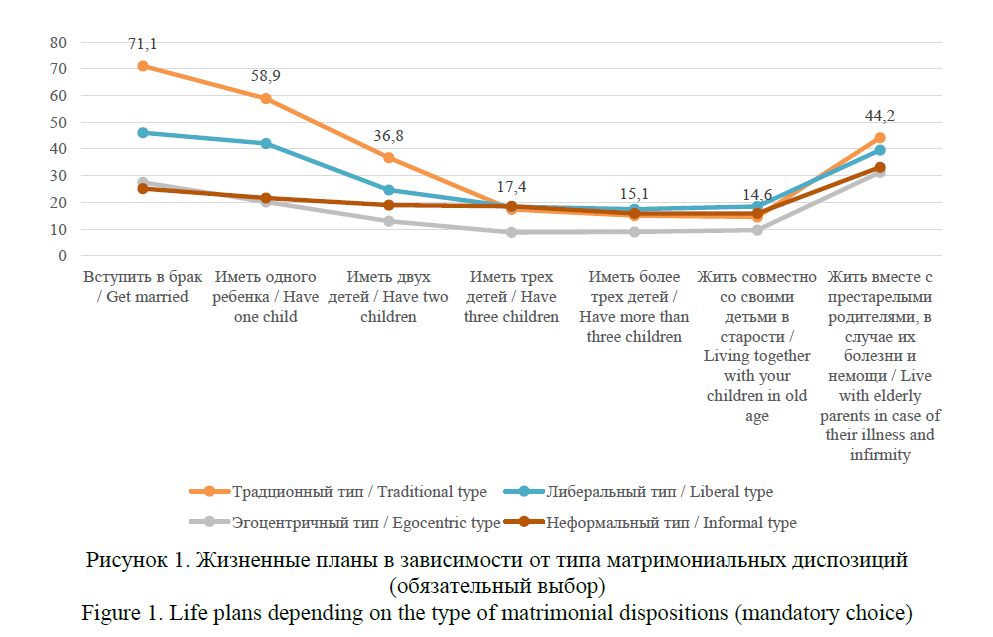
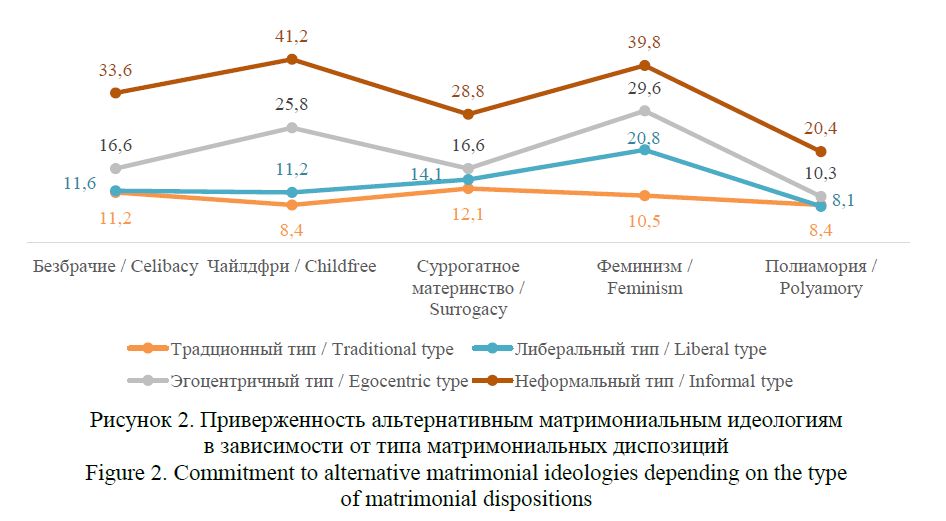
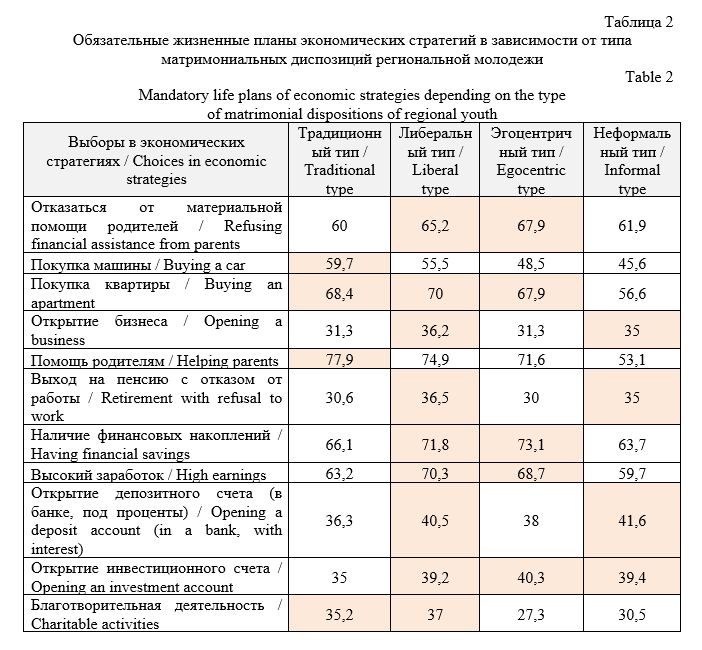
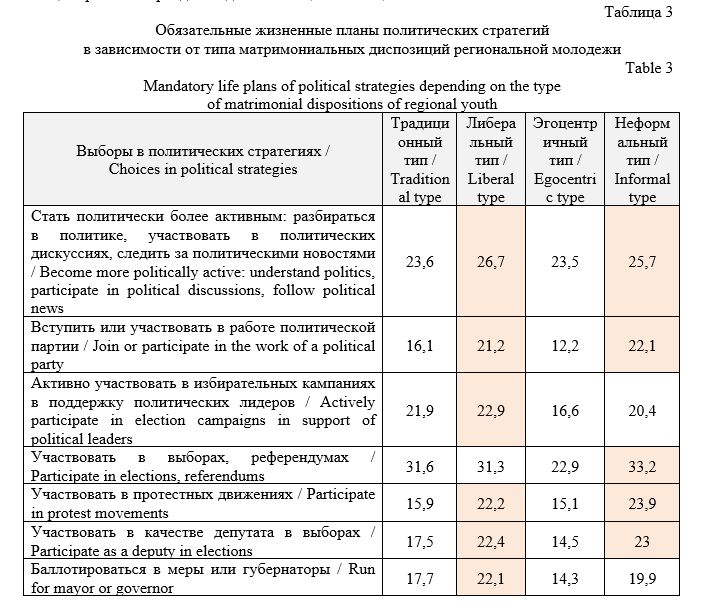
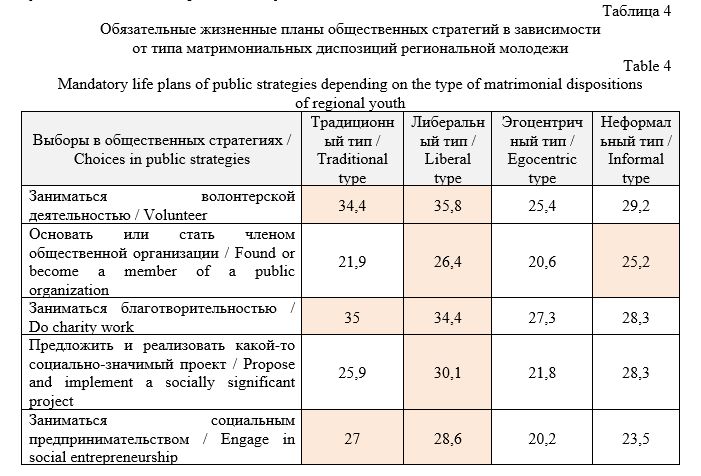
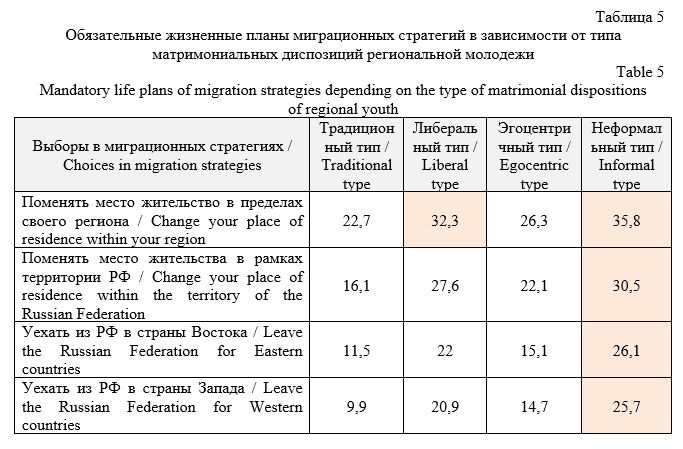
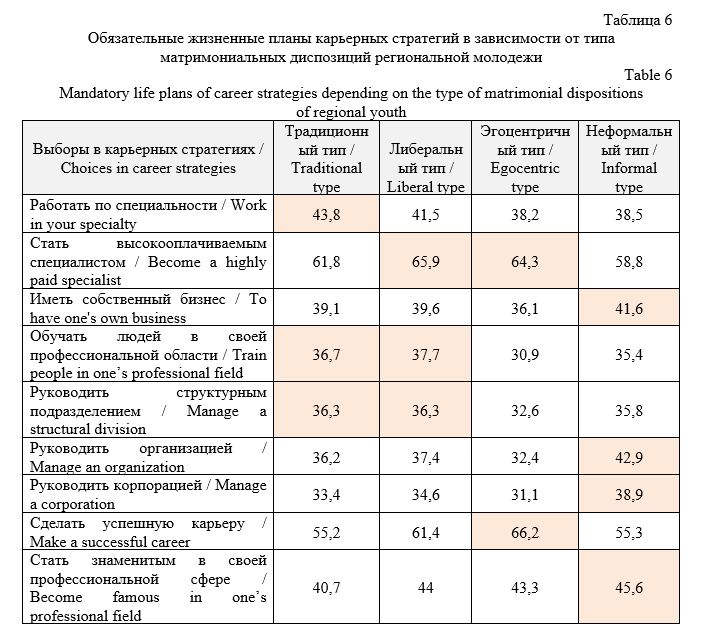
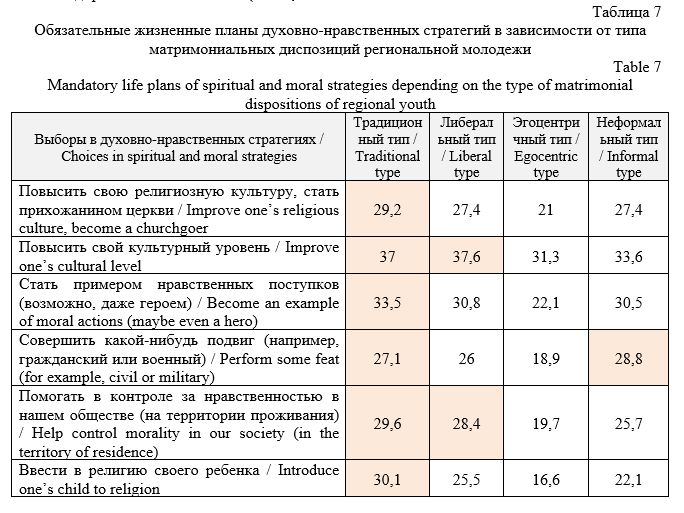
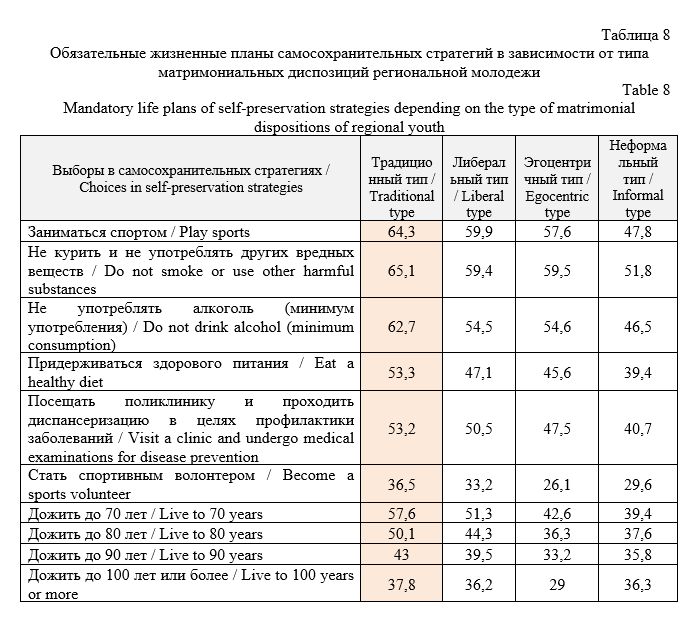
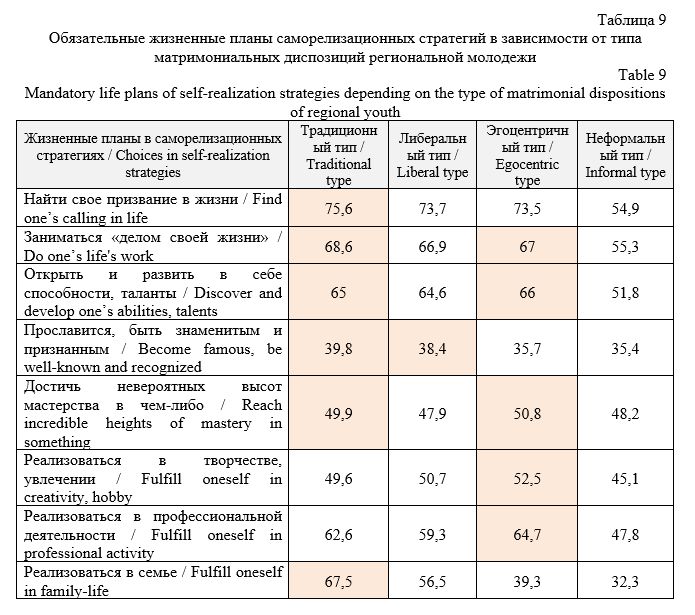
In the context of destandardised life paths, the transformation of the family institution, and the intensification of demographic challenges, the study of matrimonial strategies among today's youth is particularly important. The relevance of this article stems from the need to overcome the imbalance between the study of macrodemographic processes and micro-level life plans, as well as the need to identify the connection between private family attitudes and public strategies in the context of regional development. Understanding the value dispositions of young people as a system-forming factor in life planning is key to the development of targeted social and youth policies. Methods: The study is based on a quantitative analysis of data from the 2024 monitoring survey “Social Strategies of Regional Youth” (n=5,881, Belgorod region). The primary method is typological analysis. Based on matrimonial attitudes (attitudes toward marriage, childbearing, and family roles), four types of youth were identified and empirically validated: traditional (54.5%, focused on institutional marriage and child-centeredness), liberal (33.6%, reflective and optional attitudes toward family scenarios), egocentric (8.1%, prioritizing self-realization over family), and informal (3.8%, rejecting the traditional institution of family). This typology has become an analytical tool for comparative research of life strategies in the economic, career, political, social, migration, spiritual and moral, self-preservation, and self-realization spheres. Scientific results: It was established that matrimonial disposition acts as a fundamental sociocultural filter mediating the configuration of life plans in all key domains. Fundamentally different adaptation models were identified: solidary rootedness (traditional type), reflexive pragmatism (liberal), hyperindividualism (egocentric), and alternative sociality/asociality (informal type). The greatest complexity and social effectiveness were demonstrated by strategies of the traditional type. This type is characterized by maximum demographic potential (the imperative of marriage and childbearing), low migration mobility, which ensures the consolidation of human capital in the region, pronounced self-preservation practices, and a focus on intergenerational solidarity. Conclusions: matrimonial disposition is a reliable predictor of not only private but also public life trajectories of young people. Traditional strategies, dominant in the regional community, are most congruent with the strategic objectives of national and regional development in the areas of demographic reproduction, territorial sustainability, the preservation of social capital, and the health of the nation. The data obtained indicate the need for a transition from a unified to a differentiated youth and family policy, which, while recognizing value pluralism, will consider support for the traditional family in its modern, modernized version as a key priority for ensuring long-term socio-demographic sustainability.
Figures
Blagorozheva, J. O., Shapovalova, I. S. (2026), “Matrimonial strategies in the life planning system of youth”, Research Result. Sociology and Management, 12 (1), 45-76. DOI: 10.18413/2408-9338-2026-12-1-0-3














While nobody left any comments to this publication.
You can be first.
Blagorozheva, Zh. O. (2022), “Family strategies of regional youth”, Research Result. Sociology and Management, 8 (3), 91-102, DOI: 10.18413/2408-9338-2022-8-3-0-7, EDN: BXYIMU. (In Russian)
Blagorozheva, Zh. O., Shapovalova, I. S. (2024), “The influence of alternative values and attitudes on matrimonial strategies of young people”, Sotsialnaya politika i sotsiologiya, 23 (2), 30-39, DOI: 10.17922/2071-3665-2024-23-2-30-39, EDN: HTXQXM. (In Russian)
Verzhibok, G. V. (2018), “Family values of student youth as a matrix for building the future”, Yuzhno-rossiyskiy zhurnal sotsialnykh nauk, 19 (3), 75-95, EDN: YAJFSP. (In Russian)
Vishnevsky, Yu. R., Didkovskaya, Ya. V., Zyryanova, O. B. (2024), “Matrimonial and reproductive attitudes of young people in the context of the security of a young family”, Zhenshchina v rossiyskom obshchestve, (1), 40-55, DOI: 10.21064/WinRS.2024.1.3, EDN: BRHDYG. (In Russian)
Kisilenko, A. V., Shapovalova, I. S. (2023), “Designing a Life Path or How Young People See Their Future?”, Sotsologicheskie issledovaniya, (2), 83-94, DOI: 10.31857/S013216250024385-6, EDN: ODCAGO. (In Russian)
Polenova, M. E., Lazurenko N. V., Podporinova, N. N., Koroleva, K. Yu. (2023), “Matrimonial behavior of student youth in the context of studying social health (gender aspect)”, Problemy sotsialnoy gigieny, zdravookhraneniya i istorii meditsiny, 31 (S1), 765-773, DOI: 10.32687/0869-866X-2023-31-s1-765-773, EDN: VZYRHE. (In Russian)
Popova, L. A. (2022), “Reproductive attitudes of young real generations in the context of strengthening demographic policy measures”, Vestnik Permskogo natsionalnogo issledovatelskogo politekhnicheskogo universiteta. Sotsialno-ekonomicheskie nauki, (2), 95-111, DOI: 10.15593/2224-9354/2022.2.7, EDN: NBCSGD. (In Russian)
Rostovskaya, T. K., Bezverbnaya N. A. (2022), “Prosperous young family: finding a balance between self-realization and demographic strategies”, CITISEH, (3), 203-214, DOI: 10.15350/2409-7616.2022.3.18, EDN: OFBJFK. (In Russian)
Rostovskaya, T. K., Vasilyeva E. N. (2023), “Strategies for Forming the Well-Being of Student Families (Based on the Results of an In-Depth Interview)”, Logos et Praxis, 22 (2), 67-80, DOI: 10.15688/lp.jvolsu.2023.2.8, EDN: TMTYQC. (In Russian)
Rostovskaya, T. K., Knyazkova, E. A. (2021), “Reproductive Attitudes in Russian Society: According to the All-Russian Sociological Survey”, Vestnik Yuzhno-Rossiyskogo gosudarstvennogo tekhnicheskogo universiteta (NPI). Seriya: Sotsialno-ehkonomicheskie nauki, 14 (2), 121-129, DOI: 10.17213/2075-2067-2021-2-121-129, EDN: MIPPYF. (In Russian)
Rostovskaya, T. K., Kuchmaeva, O. V. (2020), “Transformation of the Image of the Desired Family Model in Different Generations: Results of the All-Russian Sociological Survey”, Vestnik Rossiyskogo universiteta druzhby narodov. Seriya: Sotsiologiya 20 (3), 527-545, DOI: 10.22363/2313-2272-2020-20-3-527-545, EDN: MMCWJT. (In Russian)
Rostovskaya, T. K., Shabunova, A. A., Kalachikova, O. N. (2023), “Marital and family ideas of student youth: based on the results of the author's study”, Zhenshchina v rossiyskom obshchestve, (3), 31-42, DOI: 10.21064/WinRS.2023.3.3, EDN: IVVVAZ. (In Russian)
Semenova, K. R. (2022), “Marital and family behavior of young people in modern Russian society: attitudes and values”, Gumanitarnye nauki. Vestnik Finansovogo universiteta, 12 (4), 109-113, DOI: 10.26794/2226-7867-2022-12-4-109-113, EDN: WKLLZX. (In Russian)
Sigareva, E. P., Sivoplyasova, S. Yu., Murtuzaliev, S. I. (2018), “Features of marriage, family and migration intentions of modern youth of the Russian Caucasus”, Sociodinamika, (11), 33-44, DOI: 10.25136/2409-7144.2018.11.27735, EDN: SKZILR. (In Russian)
Shabunova, A. A., Rostovskaya T. K. (2020), “On the Need to Develop a Model of Optimal Conditions for the Formation and Implementation of Demographic Attitudes”, Ekonomicheskie i sotsialnye peremeny: fakty, tendentsii, prognoz, 13 (4), 38-57, DOI: 10.15838/esc.2020.4.70.2, EDN: JJEDIR. (In Russian)
Shapovalova, I. S. (2023), “Self-assessment of financial situation and social strategies of young people”, Nauka. Kultura. Obshhestvo, 29 (3), 150-163, DOI: 10.19181/nko.2023.29.3.9, EDN: KVLEGK. (In Russian)
Shapovalova, I. S. (2021), “Problems of implementation of state youth policy in the reflection of regional youth”, Regionologiya, 29 (4), 902-932, DOI: 10.15507/2413-1407.117.029.202104.902-932, EDN: SJMMSI. (In Russian)
Shapovalova, I. S., Blagorozheva, Z. O. (2025), “Matrimonial Strategies of Regional Youth: Typology, Dispositions, Dynamics”, Integratsiya obrazovaniya, 29 (40), 711-733, DOI: 10.15507/1991-9468.029.202504.711-733, EDN: TWDSOI. (In Russian)
Shapovalova, I. S. (2025), “KPI of Regional Youth Policy Authorities in Social Strategies of Youth”, Voprosy upravleniya, 19 (2), 117-136, EDN: JOFNFR. (In Russian)
Shapovalova, I. S., Zavodyan, I. S. (2024), “Youth Social Selfie: Social Strategies of Regional Youth”, Regionologiya, 32 (4), 768-792, DOI: 10.15507/2413-1407.129.032.202404.768-792, EDN: ZBBIWU. (In Russian)