

Structure of freelance labour supply on the Profi.ru and Habr.Freelance platforms in remote work
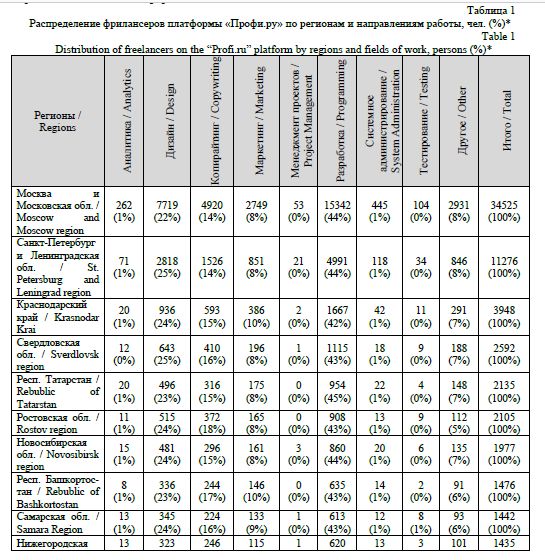
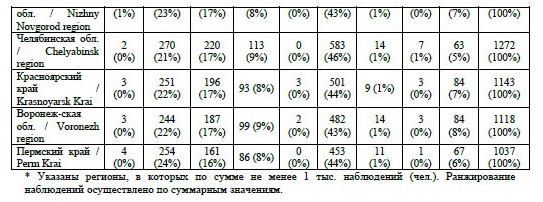
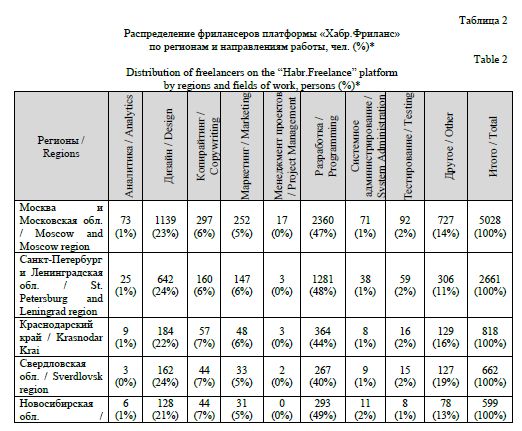
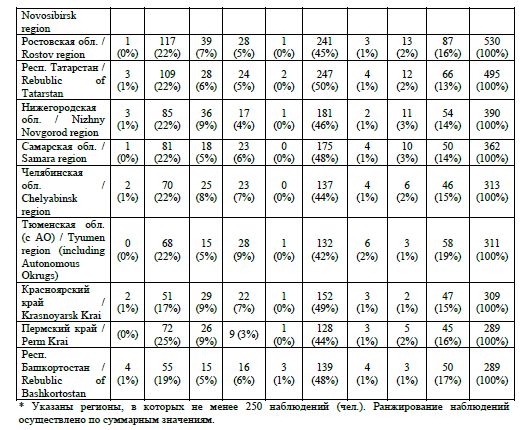
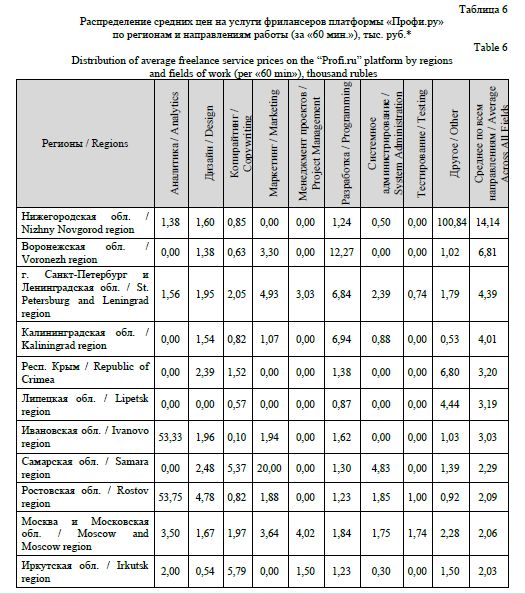
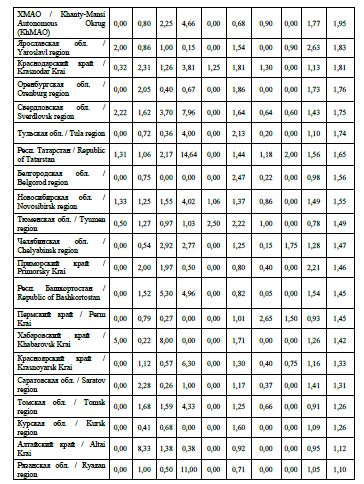
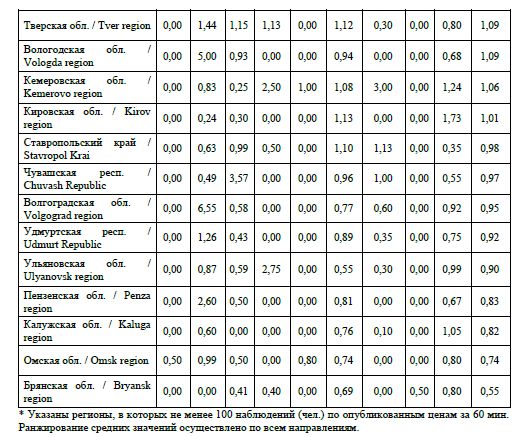
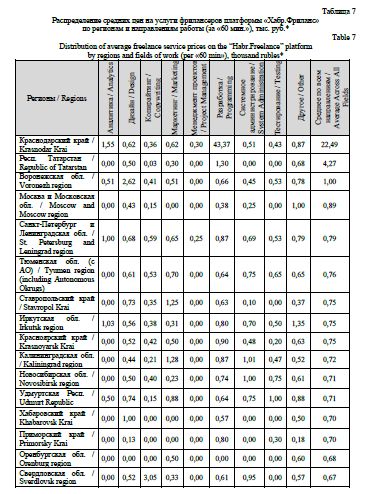
The study of the regional specifics of platform employment and the main areas of freelance services is driven by the transformation of the labor market both in Russia and globally: specifically, the digitalization of the economy and the overall virtualization of society, the proliferation of non-standard forms of employment, the development of platform employment, and the growth in the number of platform workers. The subject of this study was the profiles of remote workers on the job search and recruitment platforms Profi.ru and Freelance.habr.com. The aim of the study is to identify the structure and specifics of freelance service distribution on the Profi.ru and Freelance.habr.com. The empirical basis for this article is freelancer profiles obtained by crawling profi.ru and freelance.habr.com platforms. This study is the first to identify and describe the characteristics of the socio-demographic structure, territorial distribution and sectoral focus of specialists offering platform labour services in Russia. The study's results demonstrated that the largest share of remote workers represented on the Profi.ru and Habr.Freelance platforms are concentrated in the fields of programming, copywriting, and design. The distribution of freelancers across regions is uneven, with the highest proportion found in the Central and Northwestern Federal Districts. The results of the study capture the regional specifics and main supply areas of freelance services, and highlight the need for measures to support balanced remote platform employment development in Russia.
Figures
Turakayev, M. S., Battalova, A. I. (2025), “Structure of freelance labour supply on the Profi.ru and Habr.Freelance platforms in remote work» platforms in remote work”, Research Result. Sociology and management, 11 (4), 129-148.
















While nobody left any comments to this publication.
You can be first.
Bobkov, V. N. and Chernykh, E. A. (2020), “Platform employment: scale and signs of instability”, Mir novoy ekonomiki, 14 (2), 6-15, DOI: 10.26794/2220-6469-2020-14-2-6-15. (In Russian)
Vyaznikova, V. V. and Strebkov, D. O. (2009), “Financial behavior of Russian freelancers: opportunities and constraints”, Sotsiologichesky zhurnal, (4), 41-64, EDN: PBDRHV. (In Russian)
Gokhberg, L. M., Glazkov, B. M., Rudnik, P. B. and Abdrakhmanova, G. I. (eds.) (2023), Platformennaya ekonomika v Rossii: potentsial razvitiya: analitichesky doklad [Platform Economy in Russia: Development Potential: Analytical Report], ISIEZ VSHE, Moscow, Russia, [Online], available at: https://issek.hse.ru/mirror/pubs/share/832628936.pdf (Accessed 09 October 2024). (In Russian)
Dobrinskaya, D. E., Martynenko, T. S. (2019), “Prospects of the Russian information society: Levels of the digital divide”, RUDN Journal of Sociology, 19 (1), 108-120, DOI: 10.22363/2313-2272-2019-19-1-108-120. (In Russian)
Zherebin, V. M., Alekseeva, O. A. and Ermakova, N. A. (2016), “Internet employment as a new form of labor organization”, Narodonaselenie, 1 (71), 67-78, EDN: VRCRQL. (In Russian)
Kanarsh, G. Yu. (2022), “Platform capitalism, exploitation and inequality. Part I”, Znanie. Ponimanie. Umenie, (1), 86-103, DOI: 10.17805/zpu.2022.1.7. (In Russian)
Kanarsh, G. Yu. (2022), “Platform capitalism, exploitation and inequality. Part Y”, Znanie. Ponimanie. Umenie, (2), 115-129, DOI: 10.17805/zpu.2022.2.8. (In Russian)
Mingaleva, Zh. A. and Shuraleva, S. V. (2021), “Remote employment on online internet platforms: current state and problems of legal regulation in Russia”, Ex jure, (2), 102-117, DOI: 10.17072/2619-0648-2021-2-102-117. (In Russian)
Platformennaya zanyatost v Rossy: dinamika rasprostranennosti i klyuchevyye kharakteristiki zanyatykh: ekspertny doklad [Platform Employment in Russia: Dynamics of Prevalence and Key Characteristics of the Employed: Expert Report] (2024), Higher School of Economics National Research University, Moscow, Russia, [Online], available at: https://hse.ru/pubs/share/832628936.pdf (Accessed 09 October 2024). (In Russian)
Plotnikov, A. V. and Bragina, D. S. (2021), “Remote work during the pandemic and the impact of self-employment on the shadow economy”, Moskovsky ekonomichesky zhurnal, (5), DOI: 10.24411/2413-046X-2021-10258. (In Russian)
Sinyavskaya, O. V., Biryukova, S. S., Aptekar, A. P., Gorvat, E. S., Grishchenko, N. B., Gudkova, T. B. and Kareva, D. E. (2021), Platformennaya zanyatost: opredeleniye i regulirovaniye [Platform Employment: Definition and Regulation], National Research University «Higher School of Economics», Moscow, Russia, [Online], available at: https://ncmu.hse.ru/data/2021/05/26/1438190156/Доклад_Платформенная_занятость_002.pdf (Accessed 09 October 2024). (In Russian)
Srnicek, N. (2019), “Platform capitalism”, Journal of Economic Sociology, 20 (1), 72-82, EDN: GSXJWC. (In Russian)
Strebkov, D. O. and Shevchuk, A. V. (2019), “The trap of flexible employment: how a non-standard work schedule affects the work-life balance of freelancers”, Monitoring of Public Opinion: Economic and Social Changes, (3), 86-102, DOI: 10.14515/monitoring.2019.3.06. (In Russian)
Strebkov, D. O. and Shevchuk, A. V. (2022), Chto my znayem o frilanserakh? Sotsiologiya svobodnoy zanyatosti [What do we Know about Freelancers? Sociology of Free Employment], Publishing House of the Higher School of Economics, Moscow, Russia, 2022, ISBN 978-5-7598-2804-4. (In Russian)
Tomin, L. V. (2019), “Socio-economic conflicts within ‘platform capitalism’”, Konfliktologya, 14 (3), 33-43, DOI: 10.31312/2310-6085-2019-14-3-33-43. (In Russian)
Tonkikh, N. V. (2021), “Remote employment and parenthood: opinions of women”, Narodonaselenie, 24 (3), 92-104, DOI: 10.19181/population.2021.24.3.8. (In Russian)
Chudinovskikh, M. V., Tonkikh, N. V. and Kamarova, T. A. (2024), “Platform and remote employment of the population: analysis and development forecasts”, The Eurasian Scientific Journal, 16 (5), available at: https://esj.today/PDF/29ECVN524.pdf. (Accessed 09 October 2024). (In Russian)
Chernykh, E. A. (2021), “Socio-demographic characteristics and quality of employment of platform workers in Russia and worldwide”, Ekonomicheskie i sotsialnye peremeny: fakty, tendentsii, prognoz, 14 (2), 172-187, DOI: 10.15838/esc.2021.2.74.11. (In Russian)
Shevchuk, A. V. and Krasilnikova, A. V. (2019), “The impact of non-standard work schedules on work-life balance (based on European Social Survey data in Russia)”, Zhurnal issledovany sotsialnoy politiki, 17 (2), 223-236, DOI: 10.17323/727-0634-2019-17-2-223-236. (In Russian)
Iskra-Golec, I., Barnes-Farrell, J. and Bohle, P. (2016), Social and family issues in shift work and non-standard working hours, Springer International Publishing, Cham, Switzerland, DOI: 10.1007/978-3-319-42286-2.
This article was written with support from the Russian Science Foundation Grant № 23-18-00775 “Informal Employment in the Regions of Russia: Social Risks and Opportunities”